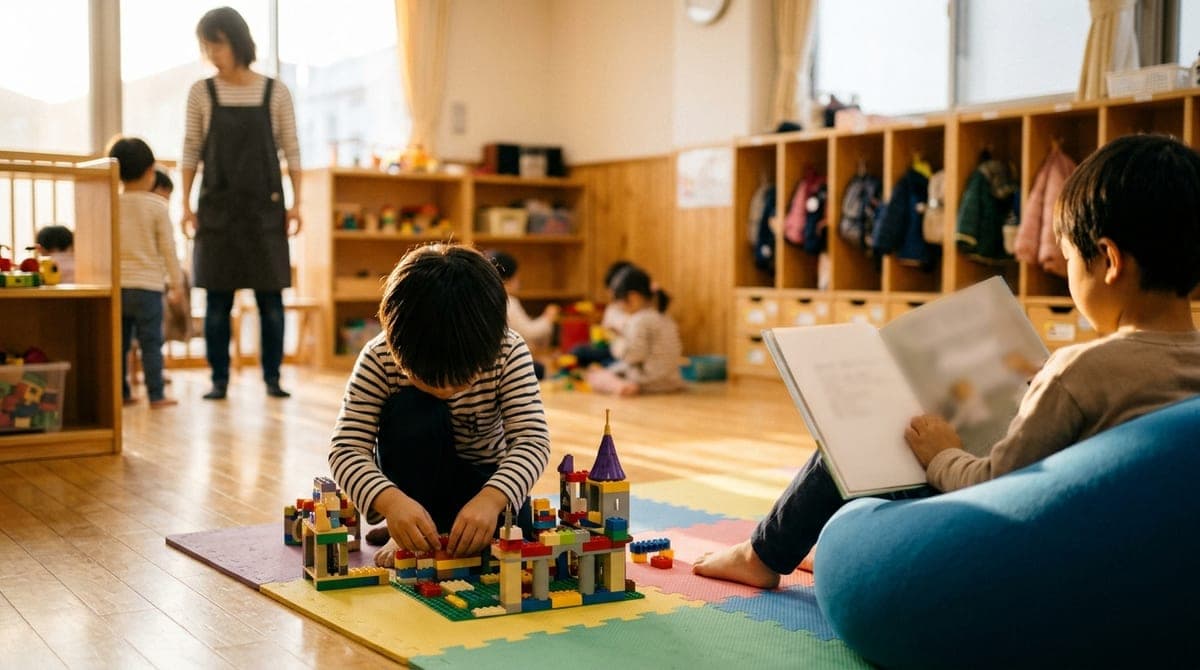
For working parents moving to Japan with elementary school children in 2026, after-school childcare programs—commonly referred to as Gakudo Club—provide a structured environment after daily school classes end. Care is available for children from 1st grade through 6th grade (G1 to G6) when both parents are currently working or unable to look after their children due to illness or caregiving duties. Enrolling involves completing a formal registration process, after which families can manage daily bookings directly with the program administration.
Who is eligible for Gakudo after-school childcare in Japan?
Eligibility for Gakudo Club after-school childcare is designed primarily to support families where parents cannot pick up their children immediately after elementary school classes finish. According to official program guidelines from facilities such as Gunma Kokusai Academy, entry is open to elementary school students enrolled from 1st grade to 6th grade (G1 to G6). To meet the entry conditions, both parents in the household must be currently working. Alternatively, eligibility is extended to families where parents are unable to provide care after school due to personal sickness or nursing care responsibilities.
What schedule, environment, and activities does Gakudo offer?
Gakudo Club programs provide a safe and comfortable environment where children can relax and study alongside their peers after regular school hours. The club operates on regular weekdays from Monday to Friday, between 3:15 pm and 6:30 pm. Operating through non-profit organization frameworks, such as NPO Ota Seeds Port at the GKA Annex location (69-1 Nishihoncho, Ota, Gunma), the program establishes a designated scheduled study time to help primary students build consistent daily study habits.
The service is closed on Sundays, national holidays, summer (Obon) vacation periods, and year-end and New Year holidays. Beyond routine academic support, the program organizes seasonal events and outdoor activities that differ from standard classroom learning. Children engage in traditional cultural and nature-focused events throughout the year, including the Tanabata festival, watermelon splitting, field strolling, the Hebigawa expedition, large picture-story shows, a Halloween party, a Christmas party, mochi pounding, and Setsubun (bean throwing).
What are the fees and extra costs for after-school care?
Understanding the financial structure of after-school childcare helps working families plan their monthly budgets effectively:
- Monthly weekday base fare: Local city residents (such as Ota city residents) pay 7,000 yen per month, while non-residents pay 10,000 yen per month.
- Fixed monthly billing: The monthly fee is charged at a fixed rate regardless of how many days a child actually attends during a given month, even during months with extended holidays.
- Vacation surcharges: During school breaks, such as summer break, an additional surcharge of 470 yen per day applies.
- Overtime fees: Additional surcharges are added whenever extended overtime services are utilized past normal hours.
- Payment processing: Bank transfer fees are not included in the standard monthly rate and must be handled separately by the family.
How do working parents apply for Gakudo enrollment?
Applying for after-school care requires following specific registration steps before placing daily or monthly reservations:
- Initial inquiry: Contact the club office by telephone (0276-31-0801) between 3:15 pm and 6:30 pm, Monday through Friday, to confirm details and office procedures.
- Form submission: Complete and submit the official application form to register your child with the program.
- Ongoing reservations: Once registration is completed, parents can submit subsequent bookings directly by email (gakudo@osp.or.jp).
- Mid-year entry: Mid-year enrollment is permitted if a vacancy exists. If no spaces are available at the time of application, the administration will notify the family as soon as a space opens.
- Occasional care option: Families who do not require daily care can utilize an occasional care system, provided they complete the mandatory advance registration beforehand.
Finding a place to stay
When preparing for a move to Japan with school-age children, securing stable housing before arrival or immediately after your status of residence is finalized makes the school and childcare application process much smoother. Many newcomers stay in a furnished monthly apartment first while navigating school admissions, visiting local care facilities, and completing administrative forms. OHAYO Stay offers furnished monthly apartments and rooms in Tokyo; most homes have a minimum stay of 30 nights (shown on each listing). No guarantor, no key money and no agency fee; booking is online with a passport or ID and a credit card. Settling into a fully equipped temporary home allows working parents to focus on organizing after-school care and setting up daily family routines without delay.