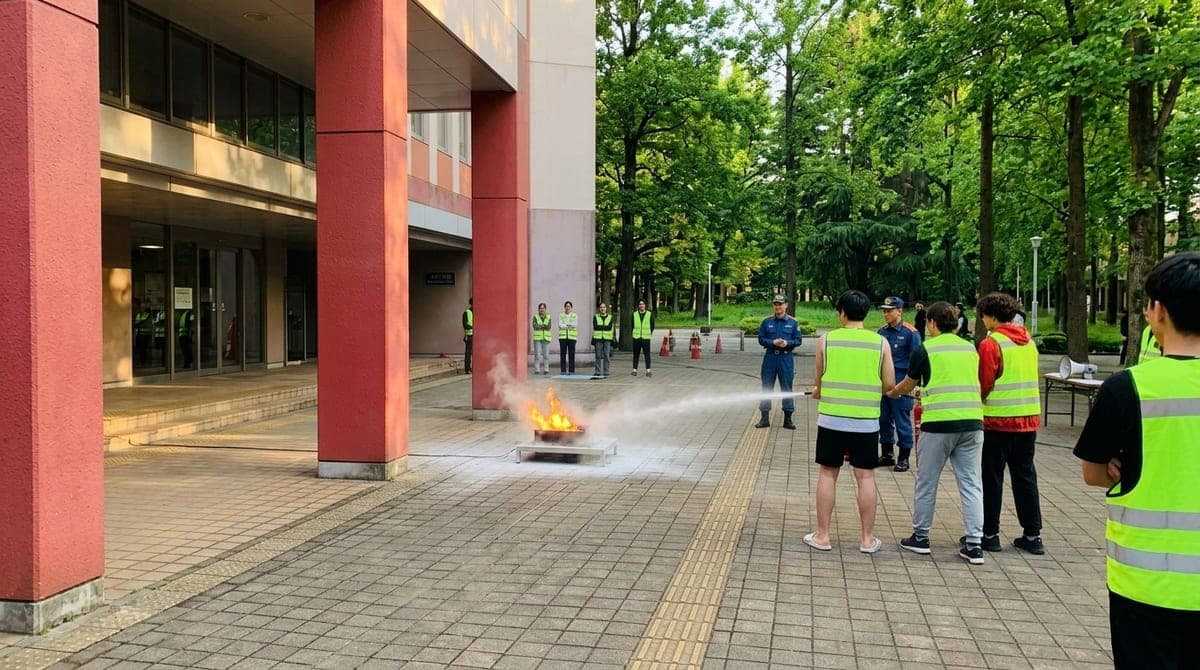
International graduate students and researchers arriving in Japan must familiarize themselves with disaster safety protocols to navigate earthquakes, fires, and emergency situations confidently. Japanese universities regularly host hands-on training sessions and multicultural workshops designed to help new arrivals master essential emergency skills. By participating in campus drills, understanding local response systems, and securing safe initial accommodation, international scholars can establish a secure foundation for their academic life in Japan.
How do Japanese universities help international students prepare for natural disasters?
Higher education institutions across Japan organize specialized disaster prevention programs to assist international students in adapting to the country's unique environment. For instance, Tokyo University of Foreign Studies (TUFS) conducts regular disaster preparedness drills twice a year—in the spring and fall—specifically for residents of its International Exchange Hall. During their session on May 23, 2026, around 80 participants, primarily newly arrived international students, gathered to gain practical emergency training.
Similarly, on October 15, 2026, Eikei University of Hiroshima arranged a hands-on disaster prevention training session at the Hiroshima City Disaster Prevention Center. A group of 12 international students attended this program to build crucial emergency response skills and better understand Japanese natural disasters such as fires and earthquakes.
Universities also create platforms for intellectual and cultural exchange regarding safety. On December 23, 2025, the Kyoto University School of Public Health hosted a workshop titled "Staying Safe in Japan: Learning and Sharing Disaster Culture" at the "linkhub@" space on the first floor of the East Building of the International Science and Innovation Building. Led by Associate Professor Dr. Tadashi Yamashita, Junior Associate Professor Dr. Ayako Kohno, and Associate Professor Dr. Genta Nakano, with support from student volunteers and the Office of Institutional Advancement and Communications, this event brought together roughly 20 international students from countries including Indonesia, Uzbekistan, Vietnam, Taiwan, Mexico, China, India, Ethiopia, Myanmar, and Slovenia.
What hands-on skills should you learn during safety training?
Participating in safety training equips international scholars with vital practical techniques:
- Experiencing earthquake simulations: At the TUFS drill, students experienced a magnitude 7 quake inside a specialized earthquake simulator vehicle. This provides critical real-life experience, particularly for scholars arriving from regions where earthquakes rarely occur.
- Smoke evacuation techniques: Training at the Hiroshima City Disaster Prevention Center allowed Eikei University students to practice navigating safely through smoke-filled environments, preparing them for indoor fire emergencies.
- Firefighting and fire extinguisher operation: Training sessions demonstrate how to operate fire extinguishers correctly and carry out basic firefighting procedures during an outbreak.
- Emergency contact protocols: Students learn essential communication skills, including how to dial 119 to request fire or medical emergency assistance in Japan.
- Medical equipment training: Drills include practical instructions on using Automated External Defibrillators (AEDs) during health crises.
- Emergency food management: At TUFS, emergency rations such as survival bread were distributed to participants to heighten safety awareness while promoting the effective use of stockpiled supplies to minimize food waste.
Why is multicultural sharing important for emergency preparedness?
Disaster preparedness involves psychological readiness alongside physical techniques. During the Kyoto University workshop, participants opened with an image drawing exercise centered on disasters before sharing their personal disaster experiences from their home countries. They engaged in small-group discussions addressing specific concerns and immediate actions required during an emergency in Japan.
According to post-event survey results, sharing diverse disaster cultures provided international students with fresh insights and increased their confidence in seeking emergency information. Many reported feeling mentally calmer regarding potential disasters after interacting with peers, emphasizing the value of open communication within international academic communities.
Finding a place to stay
When preparing to study or conduct research in Japan, arranging your initial living arrangements after receiving your Certificate of Eligibility or visa details—and before arriving in the country—ensures a smooth transition. Safe, well-located housing gives international graduate students peace of mind while adjusting to a new safety culture. Many newcomers stay in a furnished monthly apartment first when settling into life in Japan. OHAYO Stay offers furnished monthly apartments and rooms in Tokyo. Most homes have a minimum stay of 30 nights (shown on each listing). Booking requires no guarantor, no key money, and no agency fee, as the entire process is completed online with a passport or ID and a credit card.