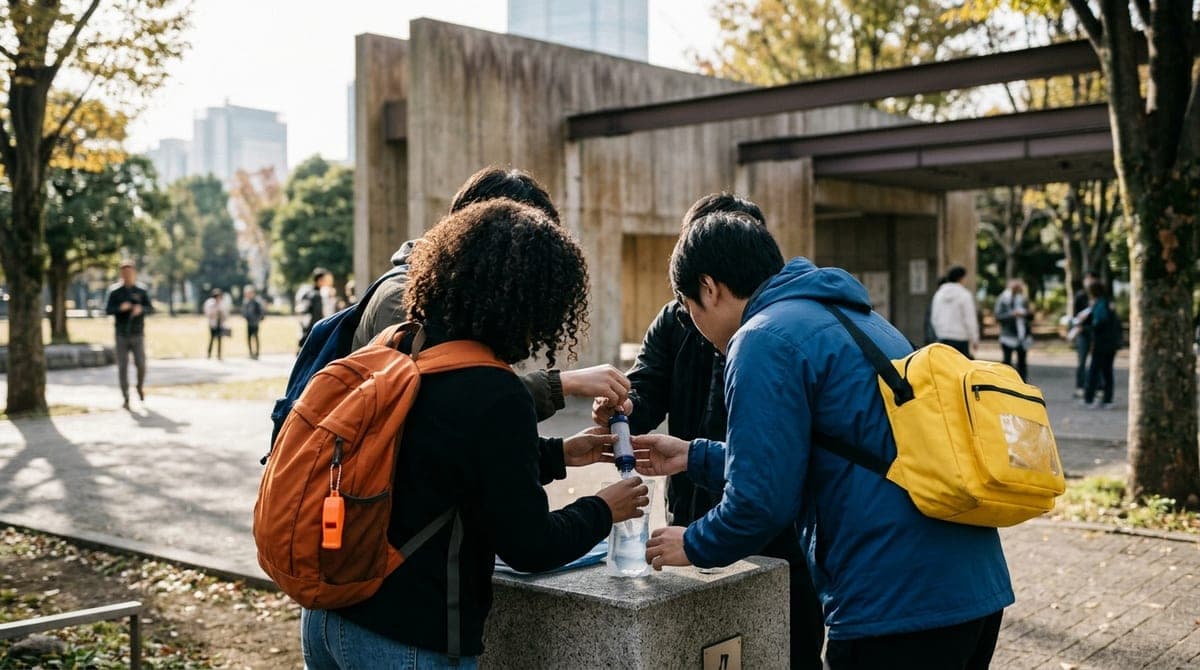
Preparing for emergency situations as an international student in Japan requires understanding official notification channels and taking immediate self-protection measures. After obtaining your Certificate of Eligibility (CoE) and student visa, establishing reliable safety routines before and upon arrival ensures a secure academic life. This 2026 safety guide outlines the national emergency alert broadcast system, official mobile resources, immediate response actions, and accurate information verification.
How do emergency alert systems work in Japan for international students?
What is J-Alert and how will you receive warnings?
Japan utilizes the National Instant Warning System, commonly known as J-Alert, to transmit critical civil protection information rapidly across the country. Government agencies use J-Alert during urgent national safety events, including potential ballistic missile threats or major civil protection emergencies.
When a J-Alert notice is issued, warnings are broadcast automatically through multiple channels simultaneously:
- Municipal disaster management radio systems using outdoor loudspeakers across local city neighborhoods.
- Mobile phone emergency warnings, including Area Mail and Emergency Alert Mail sent straight to cell phones.
- Public broadcast television and radio stations.
How can you check siren sounds and official disaster apps?
To avoid confusion when hearing warning sounds, foreign residents can listen to official civil protection audio signals in advance. The official civil protection siren sound is accessible on the FDMA website. Listening to this tone beforehand allows students to recognize official emergency alerts immediately.
International students should also install "Safety tips", an official disaster information app supervised by the Japan Tourism Agency. Created for foreign visitors and foreign residents in Japan, Safety tips delivers automatic push notifications in multiple languages for:
- Civil protection notices issued by the national government.
- Earthquake Early Warnings for quakes measuring a seismic intensity of 4 or higher.
- Tsunami warnings and volcanic eruption alerts.
- Special weather warnings and heatstroke advisories.
In addition to push notifications, Safety tips includes action flowcharts for disaster response, communication cards to request assistance from local residents, and curated link lists for essential contacts like embassies and tourist information desks. Further official details are outlined on the Sumida City civil protection page.
What should you do immediately during a J-Alert or emergency alert?
What actions should you take if you are outdoors?
If a J-Alert sounds or an emergency notification arrives while you are outside, keep calm and protect yourself immediately. Your priority is finding secure cover relative to your surroundings:
- Enter a nearby building immediately, prioritizing sturdy structures built from concrete or steel.
- Head underground if an underground facility or subway station is accessible nearby.
- If no sturdy buildings are near, hide behind available physical cover or structures.
- If no cover or buildings exist nearby, lie face down on the ground and cover your head with your arms.
What actions should you take if you are indoors?
If an emergency warning triggers while you are inside a residence, school facility, or dormitory:
- Move away from windows immediately to protect against glass shatters and air pressure.
- Relocate to a room without windows, such as an interior hallway or central room, if available.
How can foreign students avoid misinformation and find official support?
During major emergencies, false rumors and unverified information can spread rapidly online and through social media. Foreign students should avoid sharing unconfirmed reports and verify all critical updates through official government sources, municipal websites, and verified news outlets.
Local administrative bodies work within broader prefectural frameworks. For instance, the Tokyo Metropolitan Government designates official civil protection evacuation facilities under national standards. Local municipal offices, such as Sumida Ward, manage detailed records for these designated facilities, including total capacity limits and whether underground shelter space is available. Reviewing municipal guidance helps international students locate verified neighborhood shelters near their residences.
Finding a place to stay
Arranging initial housing is a crucial step after receiving your Certificate of Eligibility (CoE) and student visa, ideally finalized before departing for Japan. Securing a reliable home prior to arrival allows students to focus on school registration and mandatory city hall procedures without immediate housing stress. OHAYO Stay offers furnished monthly apartments and rooms in Tokyo. No guarantor, no key money and no agency fee; booking is online with a passport or ID and a credit card. The monthly price includes electricity, gas, water and Wi-Fi. Having a comfortable, fully equipped apartment ready upon arrival makes it easy to settle in, explore your neighborhood, and locate local emergency evacuation points safely.