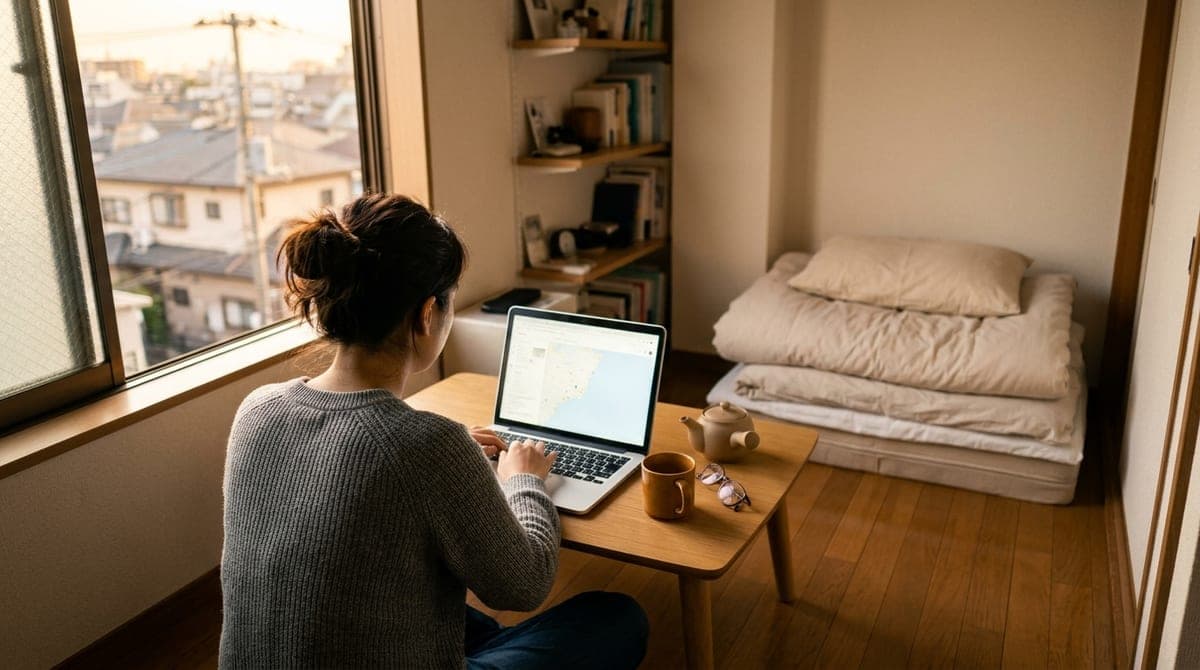
Arriving in Japan as an international research student (*kenkyusei*) or graduate student requires secure housing planning well before your academic program begins. Official guidance from Study in Japan recommends starting accommodation research immediately after receiving your university acceptance notification. While approximately 70 percent of international students live in private rentals, options such as institutional dormitories and public international houses offer structured living arrangements for new arrivals.
What housing options exist for incoming research and graduate students?
International students pursuing graduate degrees or pre-enrollment research programs in Japan generally choose between institutional dormitories and private sector housing. Dormitories operated by universities or public agencies often feature lower rental costs and eliminate initial non-refundable fees like key money (*rei-kin*), deposit (*shiki-kin*), or contract renewal fees. Many dorms come pre-equipped with essential furniture and household electrical appliances, creating a social setting where meeting fellow students is straightforward. However, dormitories have limited capacity, fixed residence terms, shared facilities (such as kitchens and bathrooms), and mandatory house rules like curfews.
A prominent public housing option for advanced international scholars is the Tokyo International Exchange Center (TIEC), located in the Tokyo Bay area (Odaiba). Managed by the Japan Student Services Organization (JASSO), TIEC provides housing for graduate students and international researchers, as detailed by Science Tokyo. TIEC offers several layout categories:
- Residence Hall A (Single, 20m²): Includes a private shower, toilet, refrigerator, desk, bed, and air conditioner. Monthly rent for international students is 35,000 yen (compared to 56,000 yen for Japanese resident assistants).
- Residence Hall B (Single, 30m²): Includes a private kitchen, washer-dryer combo, refrigerator, and desk. Monthly rent for international students is 52,000 yen (70,000 yen for Japanese residents).
- Residence Hall C & D (Family Units, 80m² to 100m²): Fully furnished multi-room units priced at 74,500 yen and 86,500 yen monthly for international residents.
TIEC is situated near Tokyo International Cruise Terminal Station on the Yurikamome Line (3-minute walk) and Tokyo Teleport Station on the Rinkai Line (15-minute walk). According to Science Tokyo, commuting from Odaiba to central university campuses like Yushima or Ookayama takes around 50 minutes. Residents can renew their lease annually up to a maximum stay of three years, provided they remain enrolled. Note that TIEC plans to adjust its facility and entrance fees on March 1, 2027, and March 1, 2031.
Additionally, some private corporate dormitories accept self-supporting international graduate students under "Student" visa status. These rooms typically range from 30,000 to 40,000 yen per month with half board included, requiring adequate Japanese language skills and active participation in corporate foundation exchange seminars.
How do rental prices and upfront costs compare?
For students choosing private housing, costs vary significantly depending on location. Based on JASSO's 2023 lifestyle survey published on Study in Japan, the national average rent for international students is 41,000 yen per month. Regional averages illustrate clear regional differences:
- Tokyo: 57,000 yen
- Kanto region: 51,000 yen
- Kinki region: 40,000 yen
- Hokkaido: 34,000 yen
- Chubu region: 30,000 yen
- Kyushu: 29,000 yen
- Shikoku: 27,000 yen
- Tohoku & Chugoku regions: 26,000 yen
In Tokyo, standard private apartment rent generally targets around 60,000 yen monthly, compared to public student dormitories like the JASSO Tokyo Japanese Language Education Center, where monthly costs average approximately 28,000 yen.
Private rentals in Japan carry upfront expenses, including security deposits equal to several months' rent, non-refundable key money, and real estate agent commissions. Renters must also purchase their own appliances and furniture.
Furthermore, private contracts typically require a joint guarantor residing in Japan. If a tenant defaults on rent or damages property, the landlord can require the guarantor to pay. International students without local personal contacts can explore university-sponsored guarantor programs, where school administration or faculty serve as joint guarantors, or pay a fee to a commercial guarantor company. To shield guarantors from unexpected liabilities such as fire damage, Japan Educational Exchanges and Services (JEES) manages the Comprehensive Renters' Insurance for Foreign Students Studying in Japan. International students should verify program eligibility with their university's international student office.
What daily living rules should international students prepare for?
Living independently or in shared quarters in Japan involves specific community expectations. Because residential buildings are located close together, excess noise during nighttime hours can easily cause friction with neighbors.
Garbage handling is also strictly regulated. Residents must carefully separate recyclable items, burnable waste, and non-burnable materials, disposing of them at designated locations only on scheduled days and times. Following local housing guidelines helps maintain positive relationships with neighbors and building management.
Finding a place to stay
When arriving in Japan before formal university enrollment or while awaiting official dormitory move-in dates, organizing your housing after receiving your acceptance notice or visa is essential. A flexible initial setup allows you time to inspect permanent apartments or settle into academic life without pressure. OHAYO Stay offers furnished monthly apartments and rooms in Tokyo. Booking is online with a passport or ID and a credit card, requiring no guarantor, no key money, and no agency fee. The monthly price includes electricity, gas, water and Wi-Fi. Securing reliable initial housing before departure ensures a smooth transition to studying in Tokyo.