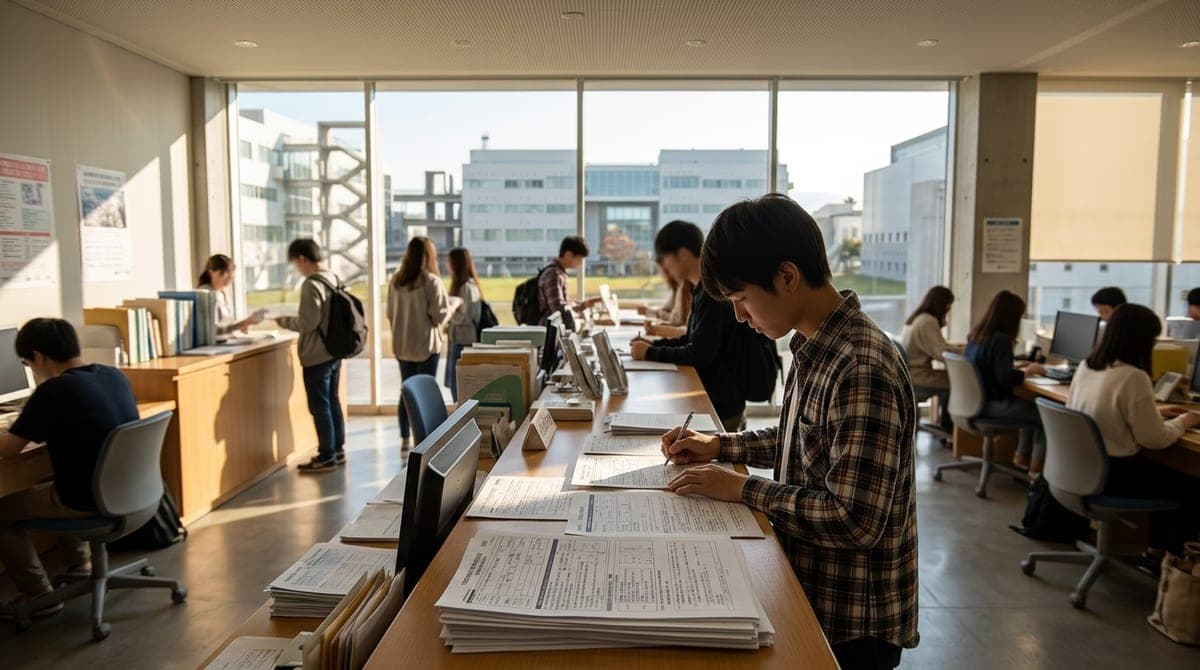
If you are an international student living in Japan for three months or longer, enrolling in National Health Insurance is mandatory, while all residents aged 20 or older must join the National Pension. You are required to visit your local city or ward office within 14 days of moving into your residence to register your address and complete insurance paperwork. By submitting an income declaration and applying for student exemptions, you can substantially lower your medical insurance costs and postpone your pension payments while studying.
Who must register for National Health Insurance upon arriving in Japan?
Under Japanese regulations, any international student holding a Student visa who stays in Japan for three months or more must join the National Health Insurance system. Maintaining valid health insurance coverage is also checked by immigration authorities when you apply to extend your period of stay.
Within 14 days of moving into your address in Japan, you must visit the local municipal office (such as a city hall or ward office) to submit a Residence Change Notification. When going to the office, remember to bring the following items:
- Your passport
- Your Residence Card
- Your Student ID
- A personal seal (hanko or inkan), if required
When completing your move-in procedures, you will also apply for your health insurance certificate. Official procedures for municipal move-in notifications and insurance setup are outlined by Kobe International University.
What medical expenses are covered by National Health Insurance?
Once enrolled, the National Health Insurance system covers 70% of your total medical treatment costs at clinics and hospitals. You are responsible for paying the remaining 30% of treatment fees, plus a portion of any prescribed drug costs.
However, insurance does not cover all medical procedures. You must pay 100% of the cost for:
- Regular health checkups
- Preventive vaccinations
- Cosmetic surgery
- Normal pregnancy and childbirth
- Artificial abortions
After processing, your health insurance card is delivered by mail. Always carry this card with you, including when traveling within Japan. For individuals who pay their insurance premiums by the set deadlines, new insurance cards are automatically mailed annually around July via simplified registered mail. Under the High-Cost Medical Expense system, if your out-of-pocket expenses for hospitalization or surgery at a single medical institution exceed your monthly limit (such as 35,400 yen in Kobe for tax-exempt households), the excess amount is refunded. Detailed rules on coverage and exclusions can be confirmed with Tottori University.
How are insurance premiums calculated and reduced for students?
Your initial payment notice usually arrives by mail 1 to 2 months after enrollment. Municipalities issue payment slips covering the period from your arrival month through March (the end of the Japanese fiscal year). You can choose to pay the entire annual amount at once using the full-period slip or pay in 10 installments issued from June to March. In some municipalities, split payments equal around 2,000 yen per period, though exact rates vary by location. Bank transfer options are also available.
Insurance premiums are calculated based on your taxable income from the previous calendar year. Earnings from part-time jobs count as income, but educational scholarships, such as JASSO honors scholarships, are not included in income calculations, as explained by Study in Japan.
If your previous year's income is zero or below specified standards, statutory reductions of 70%, 50%, or 20% apply to the household portion of the premium, according to guidelines from the Ministry of Health, Labour and Welfare. These reductions are not applied automatically. You must file an income declaration at your municipal office even if you earned zero income. Municipalities often send a simple income declaration form around February, which you must return to verify your income status.
How does the National Pension and student payment exemption work?
In Japan, all residents aged 20 or older are legally required to join the National Pension system. Because international students frequently have low or no income, the government provides the Student Payment Exemption System to postpone premium payments while enrolled in school.
The application process depends on your student category:
- Regular students: Submit the Student Payment Exemption Application Form at your local city or ward office (or university international student section) along with your Pension Booklet or payment notice.
- Non-regular students (research students and audit students): Apply for the general exemption at your city or ward office based on low previous-year income for yourself and your spouse.
Exemption approvals last for one year. Every year around April, the pension office sends renewal documents, such as a postage-free reply postcard or payment notice, which you must complete to extend your exemption.
Additionally, after registering your address, you will receive a 12-digit My Number notification card. Your My Number is required for tax, pension, social insurance, and part-time job setup. If you leave Japan permanently after completing your studies, you must visit the city office to cancel both your health insurance and pension registrations. Please confirm specific eligibility criteria and requirements with your local city office or official government agencies.
Finding a place to stay
When moving to Japan for your studies, arranging your initial accommodation before arrival allows you to complete your 14-day address registration and National Health Insurance enrollment smoothly at the local ward office. Many newcomers stay in a furnished monthly apartment first while getting settled in Tokyo. OHAYO Stay offers furnished monthly apartments and rooms in Tokyo. The monthly price includes electricity, gas, water and Wi-Fi. No guarantor, no key money and no agency fee; booking is online with a passport or ID and a credit card. Securing your housing early ensures you have a registered address ready for your resident registration and health insurance cards.