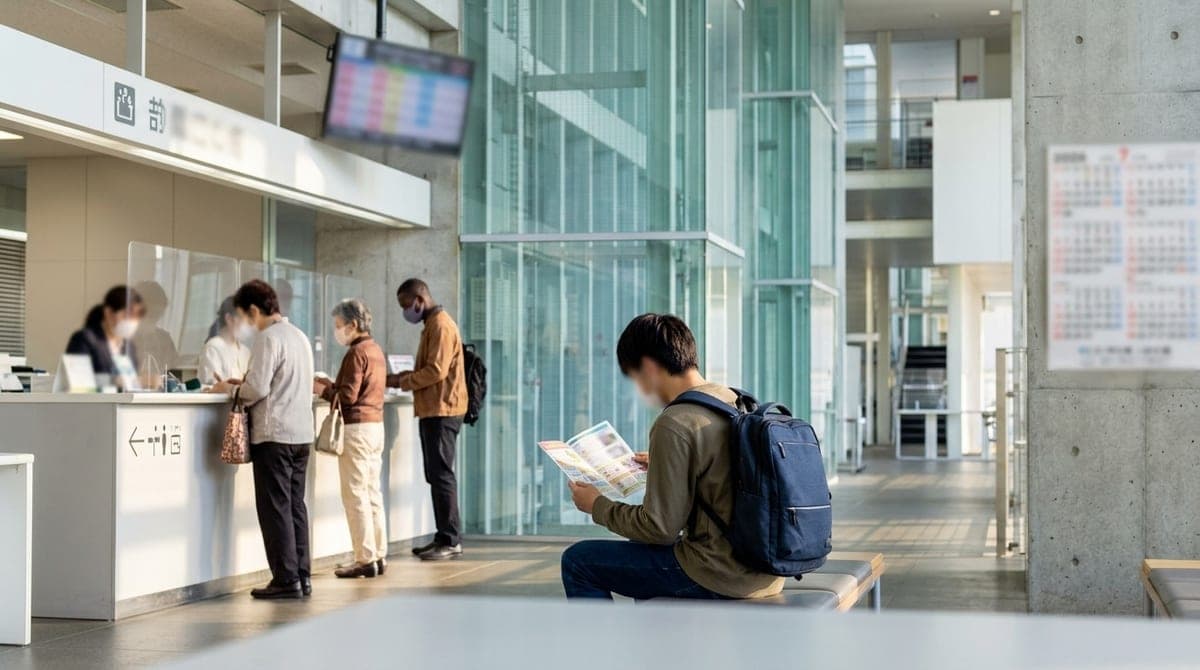
International students residing in Japan for three months or longer must enroll in the National Health Insurance (NHI) system. Under this government program, insurance covers 70% of eligible medical bills, leaving you responsible for only 30% of treatment costs at hospitals, dental clinics, and specialist offices. Registration takes place at your local municipal office right after you complete resident registration upon arriving in the country.
Who must register for Japan's National Health Insurance?
Any foreign national staying in Japan for three months or more is required to subscribe to the National Health Insurance program, also known as "Kokuho." According to official information from Study in Japan (JASSO), this universal health insurance policy applies to all foreign residents and citizens who are not enrolled in an employment-based health insurance plan or receiving public assistance. You should confirm your individual visa category requirements directly with official government sources.
Whether you enter Japan as a university candidate, exchange student, or language school student, maintaining active enrollment is mandatory. Staying up to date on your health insurance payments is critical, as falling into arrears can negatively impact your ability to extend your student visa status in the future. When first moving to Japan, many newcomers stay in a furnished monthly apartment first while completing these initial address registration and administrative steps.
How do you apply for National Health Insurance after arriving in Japan?
You sign up for the health insurance plan at the municipal or ward office corresponding to your registered local neighborhood. When submitting your Moving-in Notification ("ten-nyu todoke"), you present your Residence Card ("zairyu card") at the counter. Detailed enrollment procedures provided by TMU International Center note that after your paperwork is processed, you will receive a National Health Insurance card ("hokensho").
You must carry this insurance card with you and present it whenever visiting a doctor, dentist, or hospital. If you relocate to a different city or ward later during your studies, you must return your current insurance card to your old municipal office and re-enroll at the municipal office in your new municipality of residence.
What medical expenses are covered by National Health Insurance?
National Health Insurance covers 70% of total medical expenses for approved healthcare treatments. This includes prescription medications, dental work, hospital stays, and specialist consultations. You pay the remaining 30% out of pocket at the clinic or hospital counter.
Unlike medical systems in some other countries, Japan does not rely on a general practitioner (GP) referral system. As explained by the International College of Liberal Arts (iCLA), patients can visit specialist clinics directly without needing to obtain a primary care referral first. Most specialist clinics accept walk-in patients alongside scheduled appointments. However, it is essential to carry cash to your medical appointments because many clinics and local pharmacies do not accept credit card payments.
For high monthly medical expenses resulting from severe illness or prolonged hospitalization, the system includes a high-cost medical expense protection ceiling. Students requiring major treatment can apply for an eligibility certificate in advance to cap out-of-pocket hospital payments at their individual monthly ceiling.
How much are National Health Insurance premiums for students?
Insurance premiums are calculated by your local municipal government based on your previous year's income in Japan. During your first year in Japan, because you had no previous year's taxable income in the country, your monthly contribution is generally low—often around a few thousand yen per month (approximately 2,000 yen per month depending on the specific municipality). In certain areas such as Hachioji City, applying for a low-income premium reduction can lower annual contributions to approximately 10,000 yen per year.
To maintain this reduced rate, you must declare your income annually at the municipal office, even if you earned zero income or small amounts from part-time jobs. Educational scholarships do not count as income when applying for premium reductions. If you earn income from part-time work, your health insurance premium in the following year may increase according to your reported earnings. Payment invoices are sent directly to your address by mail and can be paid at convenience stores.
What extra accident and liability insurance should students consider?
While National Health Insurance handles medical treatment, it does not cover personal liability, property damage, or non-medical emergency expenses. To cover these extra risks, schools encourage enrolling in specialized student mutual aid plans:
- Gakkensai (Personal Accident Insurance for Students Pursuing Education and Research): Offered through Japan Educational Exchanges and Services, this insurance covers physical injuries occurring during lectures, research work, campus events, and school commutes.
- Inbound Futai-Gakuso & Comprehensive Student Life Insurance: Complements Gakkensai by offering coverage for personal liability, rescue expenses, permanent disability, and death.
- Personal Liability and Property Coverage: Protects against unexpected domestic incidents, such as accidentally causing a kitchen fire, injuring a pedestrian while riding a bicycle, or losing personal property due to a apartment burglary.
Finding a place to stay
Arranging accommodation before departing for Japan ensures a smoother transition when completing mandatory post-arrival procedures. Having a confirmed address allows you to file your Moving-in Notification and set up your National Health Insurance immediately after arrival. OHAYO Stay offers furnished monthly apartments and rooms in Tokyo. The monthly price includes electricity, gas, water and Wi-Fi, making budgeting simple during your first term. No guarantor, no key money and no agency fee; booking is online with a passport or ID and a credit card.