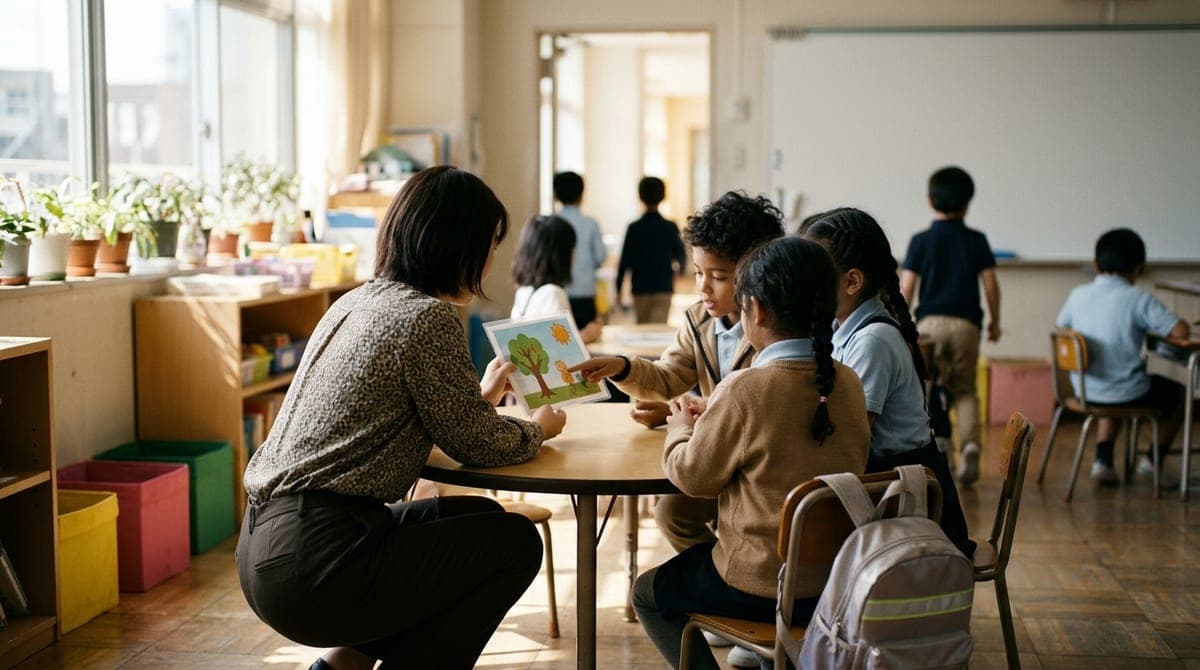
If you are relocating to Japan with school-age children, public elementary and middle schools provide targeted language assistance and adaptation measures to support foreign pupils. Official surveys by the Ministry of Education, Culture, Sports, Science and Technology (MEXT) show that public schools offer pull-out Japanese lessons, bilingual support staff, and dedicated learning curricula. Understanding these public framework resources helps families navigate enrollment, language acquisition, and secondary school placement.
What Japanese language support is available in public schools?
Data from MEXT indicates that over 70,000 foreign pupils were enrolled in public elementary, middle, and high schools across Japan in FY2006. Among these students, more than 22,000 were identified as needing specialized Japanese language instruction. Official records show that 85.6% of those requiring language help were receiving structured Japanese instruction at their schools.
Public schools take specific measures to help foreign children adapt to standard classes alongside Japanese pupils. Rather than relying solely on standard homeroom instruction, schools implement specialized formats such as:
- Pull-out Japanese instruction: Dedicated Japanese language classes tailored to the child's skill level.
- Subject-based adaptation: Classroom instruction modified to account for language barrier issues.
- Team teaching: Assigning additional staff to support subject comprehension inside regular classrooms.
To strengthen this system, national budget planning allocated funding for 985 Japanese language instruction positions in FY2008, with the national government covering one-third of the salary costs. Additionally, the National Center for Teachers' Development (NCTD) organizes specialized training programs for school administrators and lead teachers to improve school management for foreign pupils.
To ensure consistent teaching standards, MEXT developed official learning materials, including the guidebooks "Welcome to Japanese School" (*Yokoso Nihon no Gakko he*) and "Let's Learn Japanese 1–3" (*Nihongo wo Manabou 1–3*). The ministry also established the Japanese as a Second Language (JSL) Curriculum for elementary and middle schools. This curriculum helps teachers connect initial conversational Japanese skills with academic subject learning.
How can pre-school children prepare before entering elementary school?
For families with younger children, local education authorities and municipalities run orientation programs to smooth the transition into public elementary schools. Under the Returnee and Foreign Children Education Promotion Project initiated in FY2008, model regions established pre-classes (*pre-class*) for pre-school foreign children.
These pre-school initiatives focus on basic school preparation, initial language acquisition, and anxiety reduction. Local governments dispatch native-language supporters, bilingual tutors, and translators to assist children and communicate with parents during these sessions. Municipalities also hold guidance seminars and consultation sessions for guardians to explain Japanese school routines and educational expectations.
What support exists for foreign students entering high school?
Foreign middle school students preparing for higher education face distinct challenges regarding career path guidance (*shinro shido*). Local boards of education and schools conduct specialized career guidance events and individual counseling sessions for foreign pupils and their guardians, often providing translated guidance materials and interpreter assistance.
To accommodate foreign applicants in upper secondary admissions, prefectural boards of education implement specific admission adjustments:
- Special selection quotas: 14 prefectures and 8 designated cities maintain special selection frames (*tokubetsuwaku*) specifically for foreign residents.
- Examination accommodations: 35 prefectures offer adjusted testing conditions, such as reduced exam subjects, simplified test questions, or extended test times.
Beyond academic placement, educational authorities acknowledge that foreign pupils may experience adjustment stress, truancy issues, or unidentified learning difficulties (such as LD or ADHD). Local educational consultation bodies provide specialized counseling services to help schools and parents address these complex behavioral and developmental needs.
How should foreign families plan their enrollment steps?
When preparing for public school entry in Japan, families should follow a structured planning process:
- Contact local boards of education: Inquire about available Japanese language support programs and bilingual staff allocations in local municipal schools.
- Participate in municipal pre-classes: Enroll pre-school children in local preparatory classes where available.
- Utilize official study materials: Access MEXT-recommended JSL curriculum resources and language guidebooks to build foundational Japanese.
- Attend secondary career guidance: For middle school students, attend prefectural high school orientation sessions to learn about special selection quotas and exam accommodations.
Finding a place to stay
When moving to Japan with family, securing temporary housing before arrival allows you to complete local registration and school consultations smoothly. Many newcomers stay in a furnished monthly apartment first while exploring school districts and local municipal offices. OHAYO Stay offers furnished monthly apartments and rooms in Tokyo, making it easy to establish your home base. Booking is online with a passport or ID and a credit card, eliminating the need for complicated local paperwork. Most homes have a minimum stay of 30 nights (shown on each listing), giving your family enough time to locate permanent housing and finalize school arrangements.