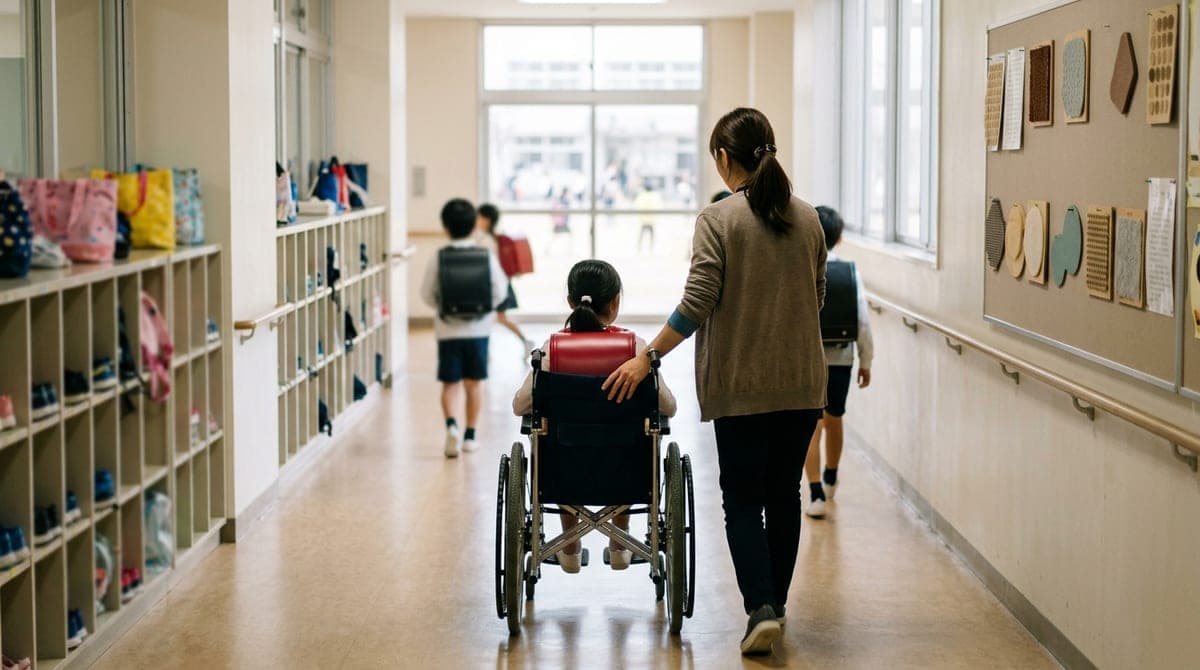
Foreign families moving to Japan with children who require individual educational support can access structured programs through the Japanese public school system. Overseen by the Ministry of Education, Culture, Sports, Science and Technology (MEXT), special needs education in Japan aims to foster full independence and social participation tailored to each child's needs. Support spans dedicated special schools, small special classes in local public schools, and periodic resource room instruction within standard classrooms.
What options exist for special needs education in Japan?
Japan's framework for special needs education is designed to accommodate various levels of individual needs, ranging from severe disabilities to mild learning difficulties. According to official guidelines from MEXT, educational settings are divided into distinct learning environments:
- Schools for Special Needs Education: Dedicated institutions designed for students with comparatively severe disabilities.
- Special Classes: Small-group classes within regular public elementary and lower secondary schools for children with mild disabilities.
- Resource Rooms: Periodic specialized instruction sessions for children enrolled full-time in standard regular classes.
- Regular Class Support: Modifications within regular classrooms, such as team-teaching, small-group instruction, tailored achievement grouping, and classroom support assistants.
These options ensure that children receive tailored guidance while participating in school life to the greatest extent possible.
What are Schools for Special Needs Education and who are they for?
Schools for Special Needs Education serve children facing comparatively severe physical, intellectual, or sensory challenges. Historical legislation previously separated these institutions by specific conditions, such as schools for the blind, deaf, or physically impaired. Following legal amendments enacted under the School Education Law in FY 2007, a single school can now accommodate multiple types of disabilities to address complex, overlapping needs effectively.
Key facts regarding these specialized institutions include:
- Educational Levels: These schools cover four educational stages: kindergarten, elementary, lower secondary, and upper secondary. Elementary and lower secondary levels fall under compulsory education in Japan.
- Curriculum and Resources: Instruction follows a specialized curriculum. Schools feature enriched staffing ratios with more teachers per student, alongside specialized equipment and adapted facilities.
- Financial Investment: Because of these specialized facilities and higher teacher-to-student ratios, the educational expenditure per student in these schools is approximately 10 times higher than in regular public schools.
How do regular public schools support children with mild disabilities or developmental disorders?
For students with mild conditions or developmental disorders, regular Japanese public elementary and lower secondary schools provide targeted support mechanisms:
Special Classes in Regular Schools
Small special classes can be established within regular elementary and lower secondary schools to provide a low-ratio environment for children with mild disabilities. Specialized branch classes may also be set up directly in hospitals to ensure continuous education for sick children during medical stays.
Resource Rooms (Tsushin Instruction)
Children enrolled in regular classrooms can visit a resource room once or several times a week for focused support while spending most of their school week with their regular peers. This model serves students with conditions such as:
- Speech impairment
- Autism and emotional disturbance
- Low vision or hard-of-hearing conditions
- Learning Disabilities (LD)
- Attention-Deficit/Hyperactivity Disorder (ADHD)
Regular Classroom Adaptations and Joint Learning
Within standard classrooms, schools utilize support assistants, team-teaching methods, and ability-based grouping. Furthermore, school programs incorporate welfare education through joint learning activities between students with disabilities and non-disabled peers, alongside community awareness initiatives for local residents.
What consistent support is available from early childhood to employment?
To ensure continuous support as children grow, MEXT commissioned all prefectures in FY 2003 to initiate the Project for the Promotion of the Special Needs Education System. This initiative laid the foundation for a comprehensive educational support system addressing developmental disorders such as LD and ADHD.
Over time, this project expanded beyond elementary and secondary schools to incorporate kindergartens and high schools. As a result, public support covers the full continuum from infancy through compulsory schooling, upper secondary education, and transition into employment. Parents should consult their local municipal education board or official government channels to discuss exact placement options, as individual visa status and local administrative rules must always be verified with official authorities.
Finding a place to stay
When relocating to Tokyo with family to arrange public school enrollment and education consultations, timing your accommodation search is essential. Securing housing after your visa or Certificate of Eligibility is confirmed, but before arriving in Japan, allows your family to settle comfortably prior to municipal school appointments. OHAYO Stay offers furnished monthly apartments and rooms in Tokyo, making it easy to establish a temporary home while navigating local administrative processes. Most homes have a minimum stay of 30 nights (shown on each listing). Booking is online with a passport or ID and a credit card, eliminating stressful paperwork so you can focus on your family's transition.