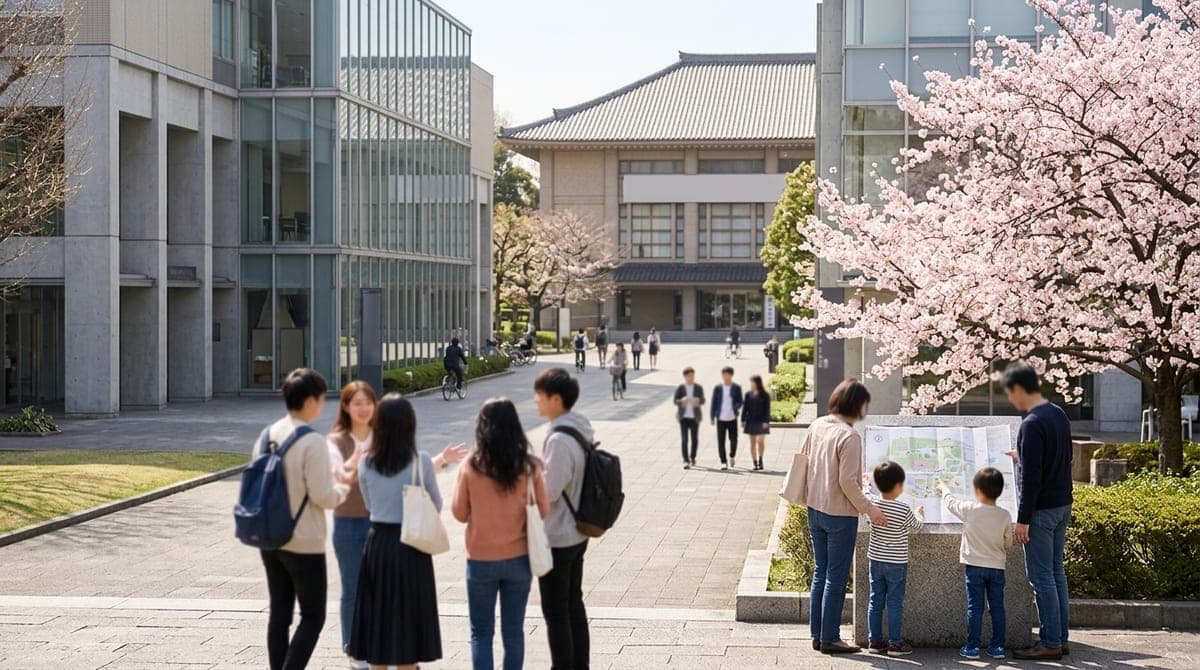
The standard school year in Japan begins in April and concludes in March of the following year, operating on a three-semester system with breaks in spring, summer, and winter. In contrast, international academic relocations aligned with university recommendations or MEXT scholarships often schedule arrivals around September, October, late March, or early April. Anyone planning an academic move to Japan for 2026 needs to coordinate these distinct timelines, local examination windows, and institutional requirements carefully.
How is the standard Japanese school year structured?
Japan's formal school system comprises six years of elementary education, three years of junior high school, and three years of high school, followed by higher education options such as two- or three-year junior colleges or four-year universities. Compulsory education spans nine years through elementary and junior high school. A dedicated Special Needs Education framework also exists to support physically or mentally challenged students in building self-reliance and participating in society. For detailed official system insights, review the JNTO Educational Travel resource.
What are the three semesters and vacation periods?
The Japanese academic calendar begins in April and ends in March of the following year. Most public schools divide the year into three distinct terms:
- First Semester: Runs from April to August, interrupted by a summer vacation from late July to late August.
- Second Semester: Runs from September to December, followed by a winter vacation from late December to early January.
- Third Semester: Runs from January to March, ending with a spring vacation from late March to early April.
How are daily school schedules and activities organized?
Public school classes are held five days a week from Monday to Friday, though some institutions also hold classes on Saturdays. In junior high and high schools, students typically attend six 50-minute class periods each day. After formal classes finish, students clean classrooms in rotating shifts before joining extracurricular student clubs (Bukatsudo). These teacher-guided clubs meet after school and on days off, offering sports like baseball, soccer, volleyball, basketball, track and field, swimming, judo, and kendo, alongside cultural activities such as band, choir, drama, art, literature, kado (flower arrangement), sado (tea ceremony), and shodo (calligraphy).
In terms of language instruction, English is compulsory in junior high and high schools, while some elementary schools introduce English in intermediate grades. Additionally, some high schools offer courses in Chinese, Korean, French, or German.
How do international arrivals align with Japanese academic schedules for 2026?
Foreign students and researchers entering Japan often move under different intake schedules depending on their academic programs or scholarship framework. While local schools start in April, international university programs and scholarship pathways frequently align with autumn entry.
When do university and MEXT scholarship arrivals happen?
According to the Study in Japan MEXT Scholarship Guide, students recommended by Japanese universities typically arrive in Japan in September or October, though some arrive in late March or early April. The Japanese Government (MEXT) Scholarship offers two main selection pathways: embassy recommendation (conducted by Japanese embassies or consulates abroad) and university recommendation (arranged through exchange agreements with approved Japanese universities). MEXT scholarship recipients receive tuition exemption and round-trip airfare allowances.
What age limits, durations, and stipends apply to Japanese study programs?
Eligibility criteria, program lengths, and monthly stipends vary across MEXT scholarship categories:
- Research Students: Must be under 35 years of age and eligible for master's or doctoral program admission. Stipends range from ¥143,000 to ¥145,000 per month for up to two years (irregular course) or the standard degree duration (regular course), which may include six months of preliminary Japanese language training.
- Undergraduate Students: Must be under 25 years of age and have completed 12 years of school education or equivalent. The program lasts five years (seven years for medicine, dentistry, pharmacy, or veterinary science), including one year of preliminary Japanese training, with a monthly stipend of ¥117,000.
- Teacher Training Students: Must be under 35 years of age, college graduates, and have at least five years of active teaching experience in primary, secondary, or teacher training institutions in their home country. The program lasts up to one year and six months, offering ¥143,000 to ¥145,000 per month.
- Japanese Studies Students: Must be between 18 and 29 years old and enrolled in an overseas undergraduate program focused on Japanese language or culture. The duration is one academic year with a stipend of ¥117,000 per month.
- College of Technology Students: Must be under 25 years old with at least 11 years of completed education. The program lasts four years (four and a half years for merchant marine studies) with a stipend of ¥117,000 per month.
- Specialized Training College Students: Must be under 25 years old with 12 years of completed schooling. The program lasts three years, offering ¥117,000 per month.
- Young Leaders Program (YLP) Students: Must be under 40 years of age in principle, with university degrees and work experience. The one-year master's program provides ¥242,000 per month.
How do entrance exams affect moving plans between January and March?
In Japan, high school enrollment exceeds 90%, and college enrollment exceeds 50%. High school and university entrance examinations take place primarily between January and March. Because schools focus heavily on entrance testing during these months, exchange visits or administrative consultations can be difficult to schedule.
What subjects are tested during screening exams?
Applicants undergoing embassy recommendation screening are evaluated through subject examinations depending on their chosen track:
- Research and Teacher Training: Tested in Japanese and English.
- Undergraduate: Tested in Japanese, English, mathematics, and two science subjects (chosen from chemistry, physics, or biology for science applicants).
- Japanese Studies: Tested in Japanese.
- College of Technology: Tested in Japanese, English, mathematics, and physics or chemistry.
- Specialized Training College: Tested in Japanese, English, and mathematics.
Always confirm specific guidelines and eligibility with the official Japanese diplomatic mission or target university in your country before submitting documents.
Finding a place to stay
Securing temporary housing should ideally be arranged after your visa or Certificate of Eligibility is issued and prior to arriving in Japan. Setting up a stable home base before school terms or university orientation begin allows families and students to adjust without unnecessary stress. OHAYO Stay offers furnished monthly apartments and rooms in Tokyo. Booking is online with a passport or ID and a credit card, requiring no guarantor, no key money and no agency fee. Additionally, the monthly price includes electricity, gas, water and Wi-Fi, making it simple to budget expenses when moving to Japan.