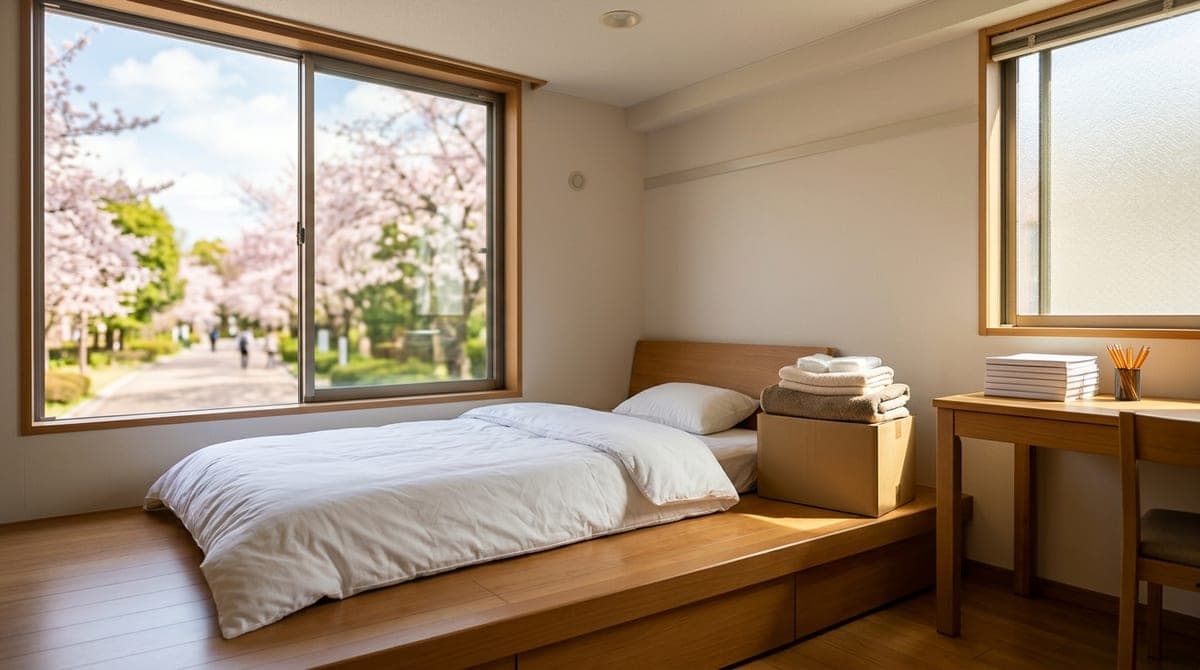
Securing your housing in Japan should begin as soon as you receive your formal university acceptance notification. Official survey data from the Japan Student Services Organization (JASSO) indicates that roughly 70 percent of international students reside in private apartments or rented accommodations rather than university dormitories. Understanding the timeline, lease requirements, regional rent levels, and university housing support will help you navigate your arrival smoothly.
When should international students start searching for housing in Japan?
You should initiate your housing research immediately upon receiving acceptance from your institution. Official recommendations from Study in Japan suggest using three primary channels to find suitable living arrangements:
- School International Student Offices: Check for university-operated dormitories, recommended housing partners, or campus guarantor assistance programs.
- Online Portals: Review housing databases and monthly property search platforms tailored for foreign residents.
- Local Real Estate Agents: Contact property agencies operating in the specific neighborhood where your university campus is located.
Beginning your evaluation early ensures adequate time to compare lease conditions and complete mandatory identity checks before your academic term begins.
Should you choose a student dormitory or a private apartment?
Both student dormitories and private rentals offer distinct living experiences. Evaluating their key traits will help you determine which option fits your personal style and budget.
Student Dormitories
Student dorms are designed to ease the academic transition for incoming students.
- Financial Benefits: Rent and operational costs are lower than standard market rates. Occupants are not required to pay security deposits (shiki-kin), gratuity fees (rei-kin), or lease renewal fees. Rooms often come furnished with standard home appliances.
- Social Environment: Shared facilities make it easier to meet fellow domestic and foreign students.
- Limitations: Room inventory is limited, meaning not all applicants receive placement. Dormitories may enforce communal rules such as night curfews or set wake-up hours, alongside shared kitchens, toilets, and bathrooms.
For reference, monthly housing expenses at dedicated facilities such as the JASSO Tokyo Japanese Language Education Center average around 28,000 yen.
Private Apartments
Private rentals provide independent living but involve greater initial complexity.
- Independence: Residents have complete freedom over their daily schedule and personal space.
- Initial Expenses: Leases frequently require upfront payments, including security deposits equal to several months of rent, non-refundable gratuity money to the landlord, and real estate agency commissions.
- Setup Requirements: Tenants must sign detailed rental agreements, procure a joint guarantor or pay a guarantee fee, and purchase all household furniture and electrical appliances independently.
How much does student rent cost across Japanese regions?
Rent costs vary significantly depending on city size, property age, proximity to transit, and local neighborhood demand. According to JASSO's 2023 Lifestyle Survey of Privately Financed International Students, average monthly rent rates across Japan are structured as follows:
- National Average: 41,000 yen
- Tokyo: 57,000 yen (with 60,000 yen considered a practical monthly baseline)
- Kanto Region: 51,000 yen
- Kinki Region: 40,000 yen
- Hokkaido: 34,000 yen
- Chubu Region: 30,000 yen
- Kyushu: 29,000 yen
- Shikoku: 27,000 yen
- Tohoku & Chugoku Regions: 26,000 yen each
While rural areas offer apartment options between 30,000 and 40,000 yen per month, students heading to metropolitan Tokyo should budget for higher initial setup fees and regular rent.
What are the joint guarantor and insurance rules for rental contracts?
Standard apartment leases in Japan generally require a joint guarantor (lian-dai ho-sho-nin). If a tenant defaults on rent or causes property damage without paying for repairs, the landlord is legally entitled to collect payment from the joint guarantor.
- University Support: Some educational institutions operate systems where school international student offices or academic staff can serve as joint guarantors for foreign students who lack local personal contacts.
- Guarantee Companies: If no personal guarantor is available, contracts may permit paying a dedicated guarantee charge to a professional guarantee agency.
- Comprehensive Renters' Insurance: Managed by Japan Educational Exchanges and Services (JEES), the Comprehensive Renters' Insurance for Foreign Students Studying in Japan helps protect against emergencies such as accidental fires, minimizing financial risk for joint guarantors. Students should verify their eligibility with their school's administrative office.
What neighbor etiquette and living rules must international students follow?
Living in Japanese residential neighborhoods requires awareness of local community standards:
- Noise Awareness: Residences in Japanese cities are located in close proximity. Loud sounds or disruptive activities can cause serious conflicts with neighbors. Quiet behavior is expected during nighttime hours.
- Garbage Disposal: Japan enforces detailed regulations regarding trash separation. Waste must be sorted strictly into correct categories and deposited at designated collection points only on specified days and times.
Finding a place to stay
Securing long-term housing before your visa or arrival is confirmed can be stressful. Many foreign students choose to stay in a furnished monthly rental during their initial weeks in Japan while visiting campuses, completing university registration, and finalizing permanent lease agreements. OHAYO Stay offers furnished monthly apartments and rooms in Tokyo. Most homes have a minimum stay of 30 nights (shown on each listing). Booking is completed online with a passport or ID and a credit card, requiring no guarantor, no key money, and no agency fee. This allows you to settle into Tokyo immediately upon landing without managing complex contracts upfront.