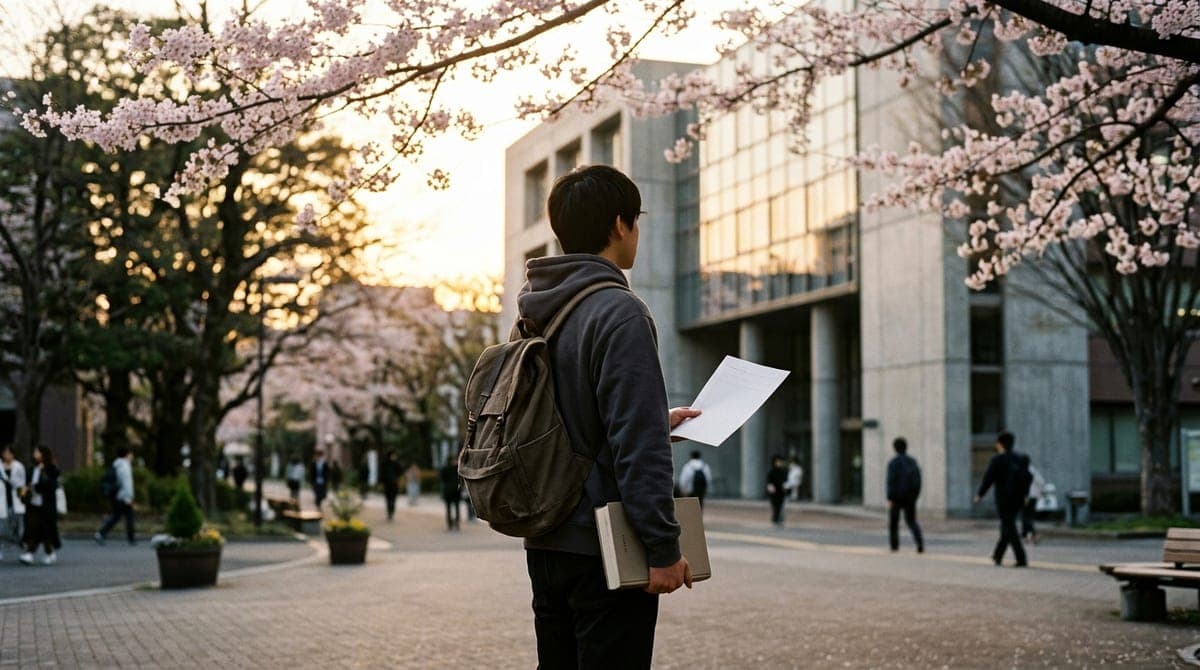
If you are planning to study in Japan in 2026, obtaining a Certificate of Eligibility (COE) is the essential first step to securing your student visa. Issued by the Immigration Services Agency of Japan, this document verifies that you meet the official financial and administrative conditions for entering Japan as an international student. Your host educational institution submits the COE application on your behalf, and once approved, you can apply for your student visa at your local Japanese embassy or consulate.
What is the Certificate of Eligibility (COE) for Japan?
The Certificate of Eligibility is a document issued by the Immigration Services Agency of Japan to confirm that an applicant satisfies the necessary entry qualifications under Japanese immigration laws. For international students, your accepting institution acts as your representative to file the application in Japan.
While receiving a COE is a major milestone, it is important to remember that final authority rests with the Immigration Services Agency of Japan, which holds sole discretion over COE issuance. Furthermore, obtaining a visa alone does not guarantee final enrollment; prospective students must still complete all required administrative procedures with their educational institution. Applicants should always verify specific requirements directly with official Japanese government sources or their designated school.
What documents do you need for a COE application?
To initiate your COE application, you must submit a completed set of documents directly to your host institution so they can review and submit them to the authorities. Depending on your personal situation, required documentation typically includes:
- The official COE application form
- A clear copy of your valid passport
- Digital photograph data that adheres to the exact specifications set by the Immigration Services Agency of Japan
- Proof of financial capacity, such as an official bank balance certificate or recent bank statement
- A scholarship certificate, if you have been granted funding
- Additional supporting documentation from a financial guarantor, if applicable
Because incomplete files can delay processing, institutions carefully evaluate all documentation before submitting it to Japanese immigration officers.
What are the financial requirements for international students in 2026?
One of the most critical components of the COE review process is demonstrating sufficient financial stability. The Immigration Services Agency of Japan requires international students to prove that they possess readily available funds to pay for both academic tuition and daily living expenses throughout their study program.
For financial planning purposes, daily living expenses in Japan are estimated at approximately ¥100,000 per month, which totals ¥1,200,000 per year. Applicants must show proof of funds that cover these living expenses combined with their specific program tuition costs.
- Bank Statements: Most applicants demonstrate financial capacity by providing an official bank balance certificate or bank statement.
- Scholarship Coverage: Students who receive scholarships covering both full tuition and living costs do not need to provide separate personal bank records for the expenses covered by that scholarship.
- Financial Proof Responsibility: If an applicant cannot provide adequate financial evidence, the educational institution cannot move forward with submitting the COE application.
Do you need a pre-entry tuberculosis screening (JPETS)?
Depending on your nationality, you may need to satisfy additional medical criteria before entering Japan. Under the Pre-Entry Tuberculosis Screening (JPETS) program, nationals from specific countries must obtain a Tuberculosis Clearance Certificate.
Currently, this requirement applies to passport holders from the Philippines, Nepal, Vietnam, and Indonesia. If you are a citizen of one of these countries, you must complete the required medical screening at an approved facility and receive clearance prior to your departure. Detailed instructions and official updates regarding screening protocols can be reviewed on the official JPETS Information website.
How far in advance should you apply for your COE and student visa?
Navigating the application timeline requires careful planning, as immigration review takes several months. Below is the general step-by-step timeline for international students preparing to study in Japan:
Step 1: Submit application documents to your school
Gather all requested paperwork, including your financial proof and passport copy, and submit them directly to your school by their internal intake deadline.
Step 2: Institutional review and corrections
The school reviews your file. If any corrections or additional documents are required, you must update your submission promptly.
Step 3: Application submission in Japan
Once your document package is complete, your school officially submits your COE application to the Immigration Services Agency of Japan.
Step 4: COE processing period
Processing by Japanese immigration authorities generally takes approximately 2 to 3 months, though individual waiting times may vary based on caseloads.
Step 5: COE issuance and receipt
When the Immigration Services Agency of Japan issues your COE, your school will notify you and send the document to you electronically via email.
Step 6: Visa application at the embassy
After receiving your official COE, visit the Japanese embassy or consulate in your home country to apply for your College Student visa. Do not attempt to apply for your visa before receiving your COE.
Step 7: Flight booking and travel
After your visa is granted, confirm the designated arrival dates specified by your institution before booking your flight to Japan.
Finding a place to stay
Once your Certificate of Eligibility (COE) and student visa are confirmed, your next priority is arranging accommodation in Tokyo prior to departure. Having your housing organized before landing ensures a seamless arrival experience as you begin your studies. Many newcomers stay in a furnished monthly apartment first to settle in comfortably while getting used to the city. OHAYO Stay offers furnished monthly apartments and rooms in Tokyo; most homes have a minimum stay of 30 nights (shown on each listing). The monthly price includes electricity, gas, water and Wi-Fi. Booking is handled online with a passport or ID and a credit card, requiring no guarantor, key money, or agency fees.