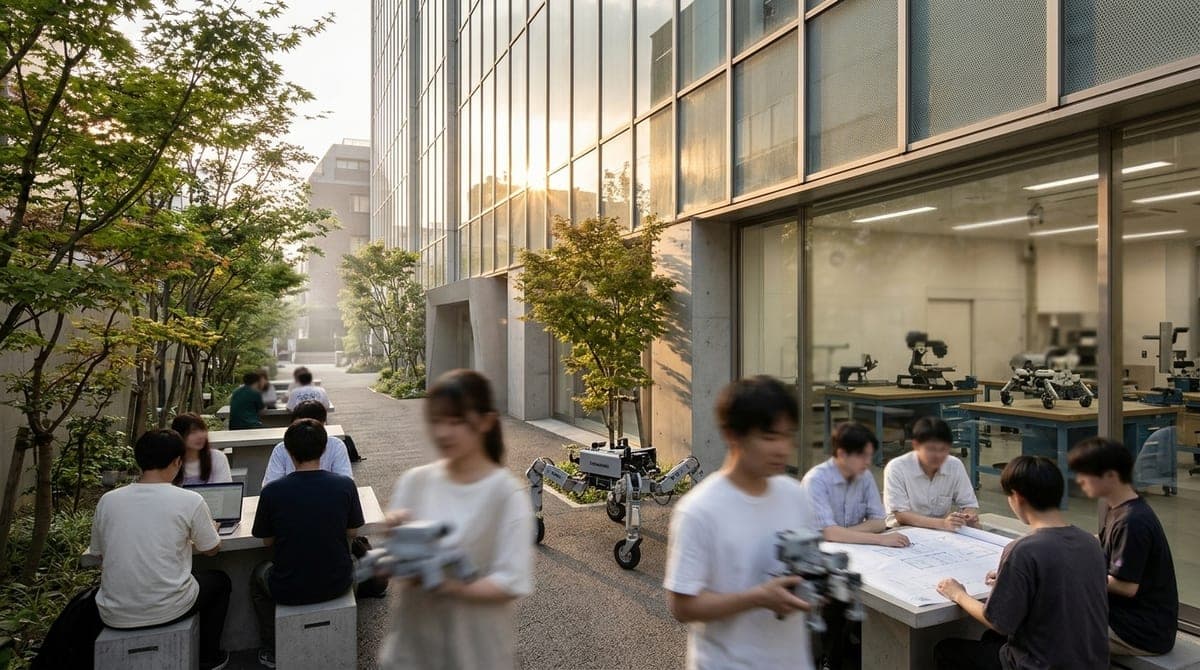
Enrolling in an IT or engineering program at a Japanese specialized training college (*senmon gakko*) provides international students with practical technical skills and a direct path toward working in Japan. Completing a recognized two-year or four-year program earns you an official title that meets the academic requirements for changing to an Engineer/Specialist in Humanities/International Services work visa upon finding relevant employment. To help prospective students, exchange applicants, and job seekers plan their education in Japan for 2026, this guide outlines course options, visa rules, application steps, and housing preparations.
What IT and engineering programs are available at Japanese vocational schools in 2026?
Vocational colleges in Japan offer target-driven programs designed around practical workplace skills. Technical tracks cover diverse specializations, ranging from software development to artificial intelligence and network management at institutions like Nihon Kogakuin College and Osaka College of Design and IT.
- Two-year programs: Fast-track options include departments such as AI Systems and Information Technology. These focus on foundational programming, Python and PHP code execution, database structures, web engineering, IoT applications, server administration, and DX business operations.
- Three-year programs: Intermediate courses such as AI and IT programming or game engineering provide deeper technical training and practical project work.
- Four-year programs: Comprehensive tracks like IT Specialist, Cybersecurity, and Super IT Engineering cover advanced topics, including real-world cyberattack defense, cloud architecture, system design, and AI solution development.
Students work with industry-standard software and hardware in dedicated computer labs, such as white hacker training rooms and programming suites. Courses are designed to accommodate beginners, including those with a humanities background, by building skills step by step.
What are the degree titles and credit requirements for international students?
Japanese specialized training colleges operating under MEXT and prefectures award recognized qualifications based on study duration and completed coursework hours:
- **Diploma (*Senmonshi*):** Awarded upon completing a program of at least two years requiring a minimum of 1,700 total class hours. This title certifies practical vocational skills and qualifies graduates to apply for university transfer admission or work visas in Japan.
- **Advanced Diploma (*Koudai Senmonshi*):** Conferred after completing a four-year program with at least 3,400 total class hours. This credential carries academic recognition equivalent to a four-year university bachelor's degree, allowing graduates to apply directly to graduate school or transition to professional employment.
How does the Student Visa and Certificate of Eligibility (COE) process work?
International students need a Student visa (Status of Residence: College Student) to attend a specialized training college. Educational institutions certified as an "Approved School" by regional immigration authorities, such as the Osaka Regional Immigration Bureau, offer specific administrative advantages to enrolled foreigners.
When attending a certified proper school, students are granted a 2-year period of stay upon arrival. This allows them to focus on their studies without submitting visa extension applications during those initial two years. Furthermore, applicants applying directly from overseas to an approved institution benefit from simplified document requirements when requesting their Certificate of Eligibility (COE).
How do you apply and pass the entrance selection?
Applying to a Japanese technical college follows a systematic timeline through designated admission pathways, including AO (Admissions Office) entry, general entry, or pre-departure admission systems using exams such as the Examination for Japanese University Admission (EJU).
- Step 1: Entry Submission: Applicants submit their preliminary entry online or by paper within the designated application period.
- Step 2: Interview and Selection: Selection procedures prioritize personal motivation, career goals, and chosen occupation over past high school grades or prior technical expertise. Applicants participate in a face-to-face interview and may attend trial classes or campus briefings on the same day.
- Step 3: Acceptance Notification: Successful candidates receive a formal letter of acceptance roughly 10 days after completing their selection interview.
- Step 4: Formal Application: Candidates complete the official application forms and submit them via registered mail or in person.
- Step 5: Enrollment Completion: After fulfilling tuition and registration procedures, the school issues an official enrollment permit and new student guidance materials.
How do vocational school graduates transition to an Engineer work visa?
After earning a Diploma or Advanced Diploma, international graduates who secure employment in Japan can apply to change their status of residence to the Engineer/Specialist in Humanities/International Services work visa through the Immigration Services Agency.
To obtain approval, the work duties specified in your employment contract must directly correspond to the technical skills and subject matter learned during your vocational program. Vocational schools assist students through comprehensive career support, including on-campus joint company briefings attended by over 200 corporate recruiters, one-month industry internships, resume reviews, and mock interview practice.
*Note: Visa regulations and status changes are evaluated individually by Japanese immigration authorities. Applicants should confirm specific eligibility rules with official immigration sources or their institution's international student advisory center.*
Finding a place to stay
Securing suitable accommodation is an essential step once your Certificate of Eligibility (COE) or visa approval is confirmed before traveling to Japan. Having your housing arranged in advance allows you to transition smoothly into student life without the stress of last-minute apartment hunting. Many newcomers stay in a furnished monthly apartment first when arriving in Tokyo. OHAYO Stay offers furnished monthly apartments and rooms in Tokyo. Most homes have a minimum stay of 30 nights (shown on each listing). Booking requires no guarantor, no key money, and no agency fee, and can be completed online using a passport or ID and a credit card.