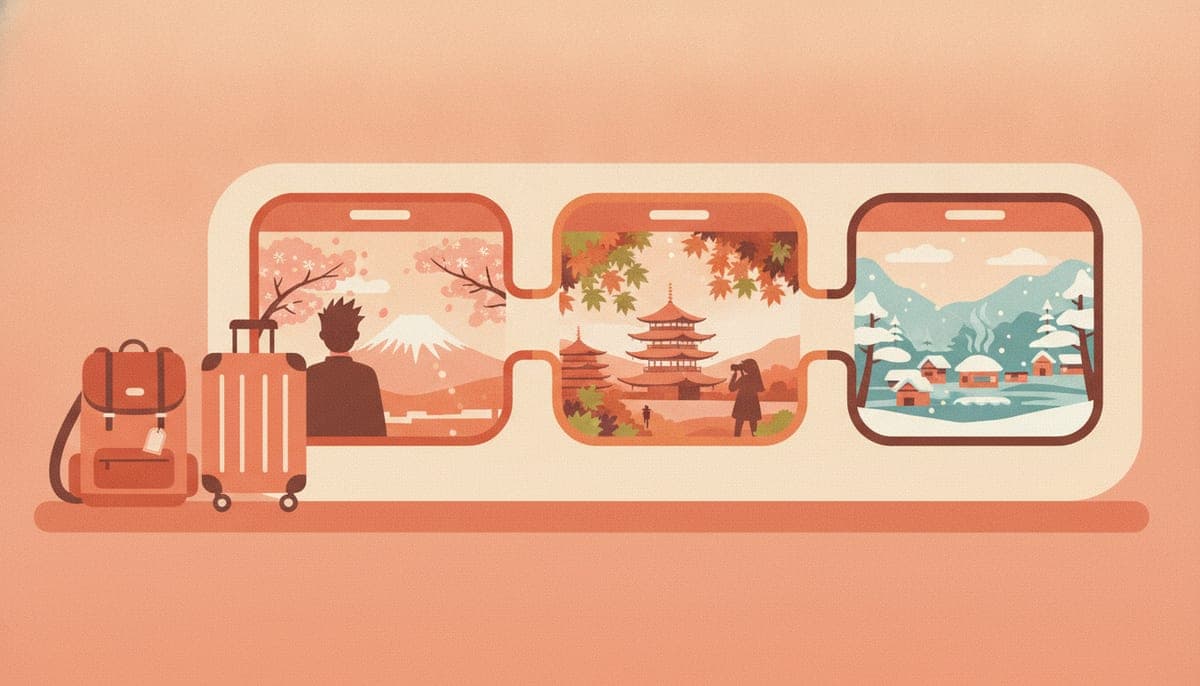
Japan's Working Holiday program allows young adults from partner nations to experience life in Japan while engaging in temporary employment to help fund their travels. As of late 2026, Japan maintains agreements with 33 countries and regions, offering unique opportunities for cultural immersion and seasonal work. Applicants should confirm all individual eligibility details directly with their local Japanese embassy or consulate, as specific terms vary by country.
What is the Japan Working Holiday Program in 2026?
The primary purpose of the Working Holiday arrangement is to allow young visitors to spend extended periods enjoying holidays and experiencing local customs in Japan. To support their living and travel expenses during their stay, participants are permitted to take on secondary employment. The program is built on mutual agreements to foster international understanding between Japan and participating jurisdictions. Official updates and structural details can be checked on the Ministry of Foreign Affairs of Japan website.
Which countries are eligible and what are the annual quotas?
As of November 1, 2026, Japan partners with 33 countries and territories under the Working Holiday scheme. Annual issuance quotas vary depending on the bilateral agreement:
- No quota limit: Australia, New Zealand, Germany, Denmark, Norway, Portugal, Sweden.
- Asia-Pacific: Republic of Korea (10,000), Taiwan (10,000), Hong Kong (1,500).
- Europe: United Kingdom (6,000), France (1,800), Ireland (800), Spain (700), Italy (500), Poland (500), Slovakia (400), Czech Republic (400), Austria (200), Hungary (200), Netherlands (200), Finland (200 for arrivals in Japan), Lithuania (100), Estonia (100 for arrivals in Japan), Latvia (100), Luxembourg (100), Malta (100), Iceland (30).
- Americas: Canada (6,283), Argentina (400 for arrivals in Japan), Chile (200), Uruguay (100), Panama (100).
What are the key eligibility criteria for applicants?
While requirements differ slightly by jurisdiction, general criteria include:
- Being a citizen residing in the partner country or territory at the time of application.
- Having the primary intention of spending a holiday in Japan.
- Being aged between 18 and 30 at the time of visa application. (Note: For Australia, Canada, and Republic of Korea, the standard age range is 18 to 25, though authorities may grant visas up to age 30).
- Travelling without children or dependent family members.
- Holding a valid passport and a return flight ticket (or sufficient financial funds to purchase one).
- Possessing adequate initial living funds for the start of the stay.
- Being in good health and holding a clean record without prior participation (unless eligible under recent repeat participation amendments).
Can you participate in the Working Holiday program more than once?
Historically, the visa was strictly a once-in-a-lifetime opportunity. However, recent rule revisions implemented between late 2024 and early 2026 allow repeat participation for citizens of select countries:
- Two entries or two consecutive years: Passport holders from Canada and the United Kingdom can participate twice in their lifetime or stay for up to two consecutive years in Japan.
- Two lifetime participations: Citizens from New Zealand, Denmark, Austria, Germany, Ireland, Slovakia, Republic of Korea, and Taiwan are now permitted to receive a Working Holiday visa for Japan up to two times in their lifetime.
What work restrictions and job search services exist in Japan?
Working holiday participants are allowed to take on part-time or temporary jobs to supplement their travel funds. However, working in adult entertainment, nightclub host/hostess services, or gambling establishments (collectively classified under adult entertainment and related businesses) is strictly forbidden. Engaging in prohibited fields can result in immediate deportation under Japanese immigration law.
For participants seeking employment assistance upon arrival, specialized support is available. Foreign Employment Service Centers operated by the government are located in Tokyo, Nagoya, Osaka, and Fukuoka. Additionally, public employment offices known as Hello Work across Japan provide job placement services for foreign residents.
What administrative steps are required after arrival?
Once you arrive and establish a residential address in Japan, you are legally required to report your address to the local city or ward office (shikuchoson) within 14 days of moving in. Completing this municipal registration ensures your Resident Card is updated correctly, which is essential for opening bank accounts, getting a mobile phone, and entering employment contracts.
Finding a place to stay
Arranging accommodation is a key step once your visa is approved and your flight dates are fixed. Many newcomers choose to stay in a furnished monthly apartment first to settle in comfortably while setting up bank accounts and job searches. OHAYO Stay offers furnished monthly apartments and rooms in Tokyo, making the move smooth for international arrivals. Most homes have a minimum stay of 30 nights (shown on each listing), giving you a stable base for your first month. Furthermore, the monthly price includes electricity, gas, water and Wi-Fi, eliminating the stress of setting up individual utility bills.
FAQ
What is the age limit for the Japan Working Holiday visa?
Applicants must be between 18 and 30 years old at the time of application. For applicants from Australia, Canada, and Korea, the standard baseline is 18 to 25, but authorities may allow applications up to age 30.
Can I work any job on a Working Holiday visa in Japan?
You can work most secondary jobs to fund your travels, but working in adult entertainment or related adult venue businesses is strictly prohibited and leads to deportation.
When must I register my address after arriving in Japan?
You must register your address at your local municipal city or ward office within 14 days of establishing your place of residence.
Sources
- 外務省「ワーキング・ホリデー制度|外務省」(checked 2026-11-02)
Facts are summarized in our own words; see the linked pages for the official details.
Rules and dates can change. Always confirm with the official source before you apply.