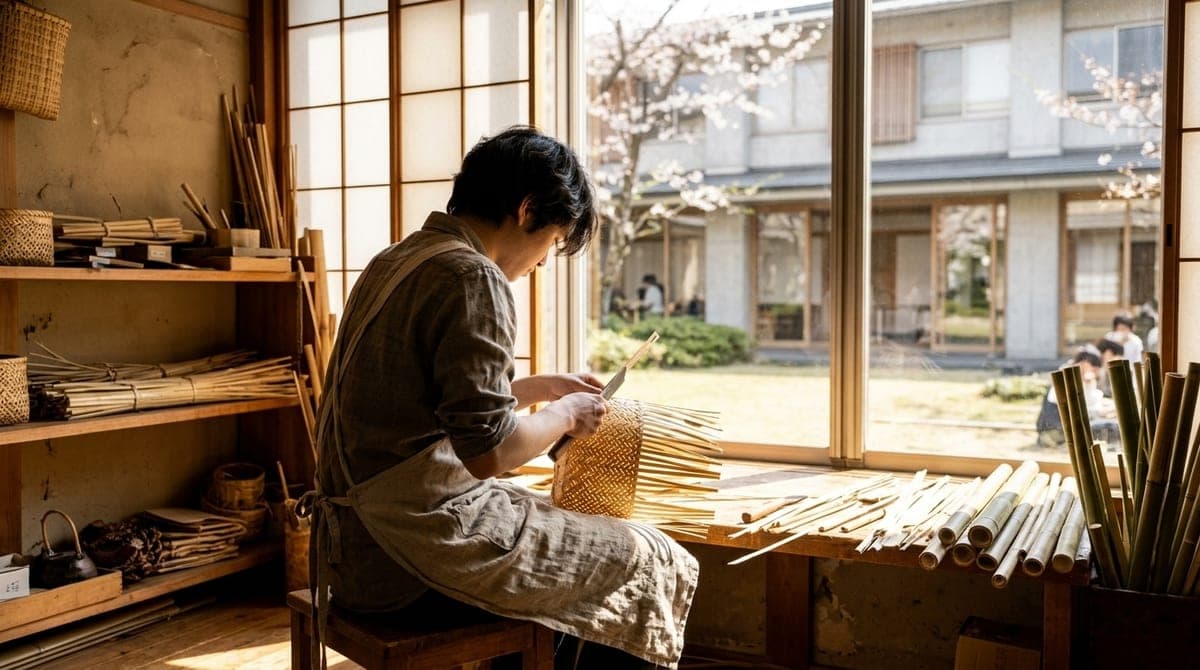
International students coming to Japan can study traditional Japanese arts and crafts through university degree programs, intensive practical workshops, and cultural exchange tracks across Tokyo and the Kansai region. Options range from short-term two-week summer practical training in Kyoto artisan workshops to full multi-year undergraduate, master's, and doctoral degree programs in Tokyo. By enrolling in Japanese higher education institutions, foreign students gain direct access to master artisans, traditional materials, and specialized studio facilities.
What traditional craft fields can international students study in Japan?
Higher education institutions in Tokyo and Kyoto offer broad instruction across historic Japanese craft genres. At the Tokyo University of the Arts Department of Crafts, students choose from seven undergraduate courses and fourteen graduate studios covering:
- Metal Carving, Metal Hammering, and Metal Casting: Traditional metalworking skills, including cold chisel preparation, engraving, chasing, inlaying, binding, cloisonné, metal coloring, jewelry, and three-dimensional objets d'art.
- Urushi-Art (Japanese Lacquer): Specialized techniques using natural Japanese lacquer.
- Ceramics: Pottery, porcelain, and related clay work.
- Textile Arts: Traditional weaving and textile design methods.
- Material Arts (Woodworking & Glass): Studio-based instruction hosted primarily at the Toride Campus.
Students can also explore traditional crafts through specialized hands-on workshop programs, such as the summer courses organized by Kyoto Seika University's traditional craftsmanship program:
- Textiles and Dyeing: Kyoto-style embroidery (Kyo-nui), dyeing and weaving (Kyo-yuzen), and natural dyeing of braids (Kumihimo).
- Paper Crafts: Handmade Echizen-style Japanese paper, Kurotani-style Japanese paper, and paper-covered sliding doors (Kyo-karakami).
- Wood, Bamboo, Lacquer, and Metal: Woodworking, bamboo crafts, lacquer crafts, incense, tea caddies, Kyoto-style inlay (Kyo-zogan), and metal work.
- Sculpture and Ceramics: Kyoto dolls (Kyo-ningyo), Kiyomizu dolls (Kiyomizu ningyo), and Kiyomizu ceramics (Kyo-yaki/Kiyomizu-yaki).
- Restoration and Cultural Arts: Kyoto-style printmaking (Kyo-hanga), Kyoto-style mounting and restoration of cultural assets, and traditional Japanese landscaping and gardening.
In addition, programs like Ritsumeikan University's Study in Kansai Program operating in Kyoto, Osaka, and Shiga combine intensive Japanese language study with cultural tracks in calligraphy, ceramics, and tea ceremony.
How are craft degrees and practical workshop programs structured?
Craft education in Japan combines foundational training with specialized hands-on studio work.
Degree tracks at Tokyo University of the Arts
Craft instruction at Tokyo University of the Arts originated in 1889 as the Art-Crafts Course at the Tokyo Fine Arts School. The department was reorganized in 1975 to cover metal arts, lacquer, ceramics, and textiles. Woodworking was added in 1995 and Glass in 2005. In 2018, Woodworking was aligned under Urushi-Art and Glass under Ceramics, before both were merged into Material Arts (Woodworking & Glass) in 2022.
- First-Year Foundation: First-year undergraduate students enter the Crafts Laboratory at the Ueno campus. During the first semester, students pick three of six or seven practical fields and attend the required "Theory of Craft Production" lecture series. In the second semester, students take modeling with Sculpture faculty and painting with Japanese Painting and Oil Painting instructors. First-year art and music students also collaborate to create Happi (festival clothing) and a Mikoshi (portable shrine) for the autumn Geisai school festival.
- Specialization: From the second year onward, students concentrate in one specific studio. For example, in Metal Carving—a field shaped by Imperial artists Natsuo Kano and Shomin Umino, who systematized Muromachi-period metal techniques using metal plates still used in class today—students move from basic toolmaking to advanced living space designs.
- Degrees Offered: The institution awards Bachelor's degrees upon credit completion and graduation project review, Master's degrees based on creative work and research, and Doctoral degrees following dissertation and creative project assessments.
Summer workshop programs and public lectures
At Kyoto Seika University, the "Practice on Traditional Industry of Kyoto" course has run every summer for over 40 years since 1979, having trained more than 3,500 students to date. This two-week course places students across all faculties—such as Manga students painting ceramics or Fashion students studying Kumihimo braiding and kimono graphics—directly into working Kyoto artisan studios. The university also offers a public lecture series in Japanese titled "Japanese Traditional Culture: Wa," exploring classical arts including Noh, kabuki, tea ceremony, and ikebana.
Finding a place to stay
When preparing to study traditional crafts in Japan, arranging housing early helps ensure a stress-free transition before your university term or summer workshop begins. Once your acceptance or program registration is confirmed, you should secure a place to live prior to traveling to Tokyo or Kyoto. Many newcomers stay in a furnished monthly apartment first while adjusting to local life and studio routines. OHAYO Stay offers furnished monthly apartments and rooms in Tokyo; most homes have a minimum stay of 30 nights (shown on each listing). No guarantor, no key money and no agency fee; booking is online with a passport or ID and a credit card. This flexible arrangement allows international students to settle in quickly and focus entirely on their craft practice.