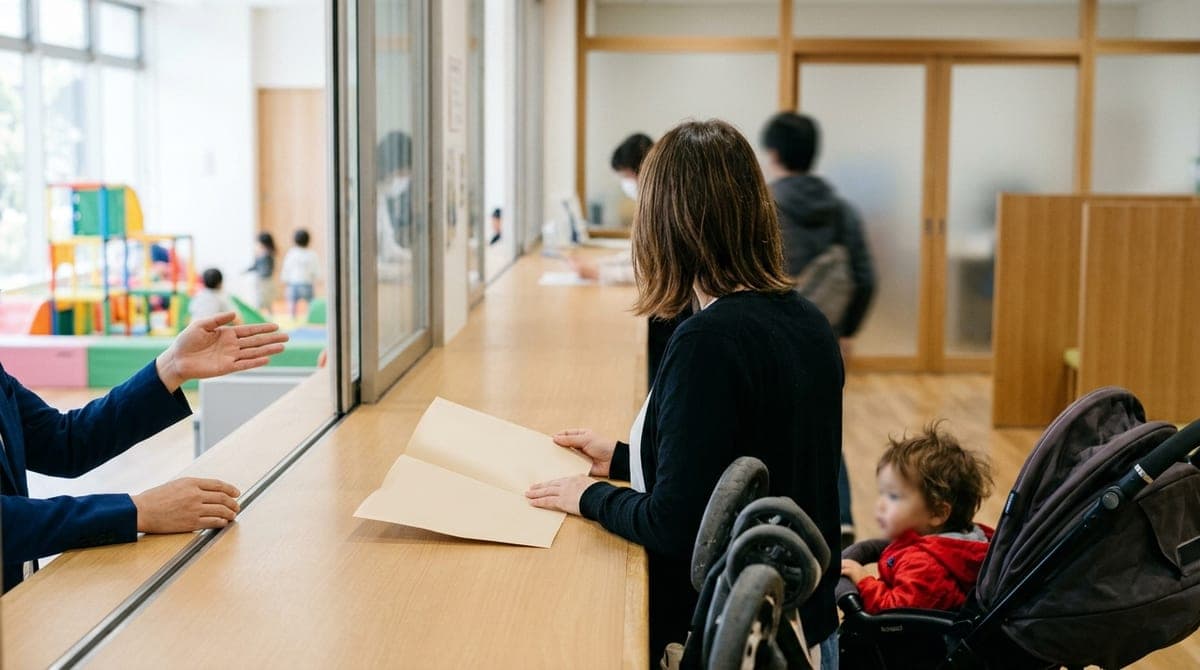
Moving to Tokyo with children in 2026 requires completing specific administrative steps at your local municipal office within strict official deadlines. Within 14 days of moving into your new address, foreign residents must complete an in-person moving-in notification, update their Resident Cards, and enroll in National Health Insurance. At the same ward or city office, families must also register for municipal child benefits, including the Child Allowance and the Infant/Child Medical Certificate.
Following official municipal rules, such as those outlined in the University of Tokyo International Student Moving Guide, ensures a smooth transition for foreign parents, students, and working professionals establishing a household in Japan.
What city office procedures are required when moving to Tokyo in 2026?
When arriving at your new residence in Tokyo, your first administrative priority is visiting your local city or ward office (ku-yakusho). Under Japanese immigration and municipal registration regulations, you must complete your moving-in notification ("tennyu-todoke") in person within 14 days of moving into your new home. If you are relocating from another municipality within Japan, you must first obtain a moving-out certificate ("tenshutsu-todoke") from your former city office within 14 days before moving, or submit it online via the MyNa Portal using a My Number Card with a smartphone (online submission is not available when leaving Japan entirely).
If you are relocating to a new address within the exact same city or ward, you must submit a notification of change of address ("ten-ju-todoke"). During this in-person visit, all foreign family members must present their physical Resident Cards so the municipal officer can officially record the new address on the back of each card within the 14-day statutory period.
How do foreign families register for National Health Insurance?
All residents in Japan are required to hold public health coverage. If you are not enrolled through an employer's social insurance, you must enroll in National Health Insurance ("Kokumin Kenko Hoken") at your new city or ward office. This step is completed at the municipal office immediately after processing your moving-in notification.
If you previously lived in another Japanese municipality, you must settle any outstanding National Health Insurance premiums at your former ward office before completing your moving-out procedure. Once you move to your new ward in Tokyo, newly enrolling at your new municipality ensures continuous medical coverage for your entire family without gaps in protection.
How do parents sign up for Child Allowance and medical certificates in Tokyo?
Foreign parents living in Tokyo with dependent children must register for specific municipal benefits at their new ward or city office immediately after updating their residential address. The two primary procedures for families are:
- Child Allowance ("Jido Teate"): Parents must submit an application for the Child Allowance at the municipal child division. Eligibility and registration require establishing legal residency and completing your address registration.
- Infant/Child Medical Certificate ("乳幼児・児童医療費受給者証"): Municipalities in Tokyo provide medical expense subsidies for infants and children. Parents must apply for this certificate at the ward office to receive reduced or subsidized costs for healthcare visits and prescription drugs.
Completing these registrations during your initial city office visit prevents delays in receiving monthly allowances and healthcare benefits for your children.
What utility and postal updates are necessary after moving?
Setting up your household requires coordinating utility services and mail redirection. When relocating within Japan, you must contact your water, electricity, and gas utility providers in advance to specify your service termination date at your old residence and your service activation date at your new home. Keep your monthly payment receipts accessible, as providers require your customer number to process changes.
To prevent missing essential documents or school notifications, submit a official "Change of Address" application to Japan Post. You can register online or submit a paper form at any post office by presenting personal identification and documentation verifying your new address. Japan Post will forward your mail to your new address free of charge for one full year.
How should families handle large trash disposal and moving logistics?
When arranging your move, contact moving companies well in advance to obtain cost estimates, as pricing varies depending on distance and total volume of goods. Single household moving packages are often available. If you are leaving a rental property, review your rental contract's required notice period; failing to notify your landlord or realtor on time may obligate you to pay an extra month of rent even after moving out. Your deposit will be reviewed and refunded based on the room's final condition upon inspection.
Disposing of bulky items ("sodai gomi") requires contacting your local waste disposal center in advance. You must purchase specific disposal stamps from local convenience stores, attach them to your items, and place the items at designated pick-up locations on your scheduled day. Specific recycling regulations apply to large appliances, including fridges, freezers, televisions, air conditioning units, and washing machines. If you are relocating or returning abroad, contact the waste center early to secure a pick-up slot.
Finding a place to stay
Arranging housing before arriving in Tokyo provides a registered address necessary for your initial city office procedures and visa onboarding. Many foreign families and students choose to stay in a furnished monthly apartment when first arriving in Japan. OHAYO Stay offers furnished monthly apartments and rooms in Tokyo, making the initial transition straightforward. Most homes have a minimum stay of 30 nights, which is clearly shown on each listing. The monthly price includes electricity, gas, water and Wi-Fi, allowing families to avoid separate utility setups during their first month. Securing short-term furnished accommodation gives parents adequate time to visit city offices, inspect local neighborhoods, and enroll children in school.