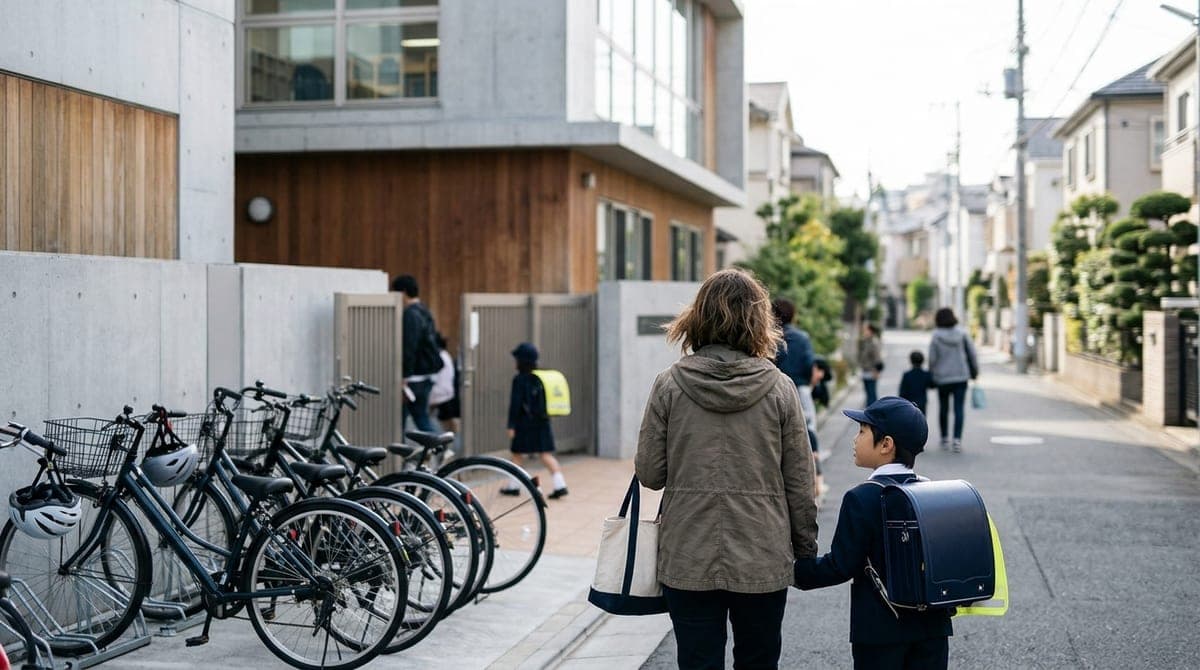
Foreign children residing in Tokyo are entitled to receive an education and can enroll in local Japanese public elementary and junior high schools at any time of the year. Public school tuition and textbooks are completely free of charge, though families must cover individual school supplies. Parents can initiate enrollment by visiting their local municipal office in Tokyo.
Are foreign children eligible to attend public school in Tokyo?
Foreign children living in Tokyo are entitled to receive an education just as Japanese citizens are. While compulsory education laws in Japan specifically apply to Japanese nationals, public elementary and junior high schools welcome foreign students whenever their parents or legal guardians choose to enroll them.
In addition to local public schools, Tokyo offers several educational environments for children, including private schools, international schools, and specialized institutions such as metropolitan schools for special needs education.
How does the public elementary and junior high school system work in Japan?
Compulsory-level schooling in Japan is divided into two stages: elementary school (shogakko) and junior high school (chugakko).
- Elementary School: Children can enroll in elementary school starting in the April following their sixth birthday. Studies continue for six academic years.
- Junior High School: Upon graduating from elementary school, students may enter junior high school for an additional three years of education.
The Japanese academic year begins in April. Depending on the school, the year is structured into either semesters (two terms) or trimesters (three terms).
Are public elementary and junior high schools free in Tokyo?
Tuition and official textbooks at public elementary and junior high schools are free of charge for all enrolled foreign and domestic students. However, parents must pay for personal items, such as daily school supplies.
If financial difficulties make it hard for a family to afford necessary school supplies, municipal governments provide financial assistance through School Expense Grants. Parents can learn more about these grants through their local municipal office or the Tokyo Metropolitan Board of Education.
How do foreign parents enroll their children in a Tokyo public school?
To enroll a child of foreign nationality in a local public elementary or junior high school, parents or legal guardians must complete administrative procedures at their municipal office (ward office, city hall, town hall, or village office).
Enrollment procedures can be undertaken at any time during the year rather than only before April. Parents can consult local administrative contacts listed through the official Enrollment in Public Elementary and Junior High Schools -TMG resource.
What education consultation and Japanese language support options exist?
Navigating a new educational environment can raise many questions for foreign parents. Tokyo provides multiple consultation channels and dedicated Japanese language learning materials:
- Tokyo Metropolitan Education Consultation Center: Offers general education advice and a free bullying hotline at 0120-53-8288 (available 24 hours a day, 7 days a week in Japanese).
- On-site Consultations: Held weekdays from 9:00 a.m. to 6:00 p.m., and on the third Saturday of each month from 9:00 a.m. to 5:00 p.m. (held on the fourth Saturday in August). Prior phone reservations are required.
- Interpretation Services: On-site consultation interpreters are available every Friday from 1:00 p.m. to 5:00 p.m. (registration closes at 4:00 p.m.) for foreign elementary and junior high school students. Supported languages include English, Chinese, and Korean.
- MEXT School Guidebooks: The Ministry of Education, Culture, Sports, Science and Technology (MEXT) publishes the *Guidebook for Starting School* in English, Chinese, Filipino, Korean, Portuguese, Spanish, and Vietnamese.
- Supplemental Japanese Language Textbooks: Resources such as the *Handbook for Teaching Japanese* and the textbook *Tanoshi Gakko* assist foreign students with language learning and adapting to Japanese school life. *Tanoshi Gakko* is published in 22 languages, including English, Chinese, Korean, Spanish, French, Tagalog/Filipino, Vietnamese, Portuguese, Arabic, Hindi, and others.
What about high school entrance exams and night school programs?
After completing junior high school, foreign students seeking high school entry can take advantage of special arrangements. The Tokyo Metropolitan Government conducts high school entrance examinations specifically designed for foreign students residing in Tokyo.
For individuals who could not complete elementary or junior high school, or who received insufficient education in junior high school due to various circumstances, Tokyo operates eight public junior high school night school programs.
For additional administrative guidance on public education in the capital, consult the official Enrollment in Public Elementary and Junior High Schools -TMG website.
Finding a place to stay
When moving to Tokyo with your family, settling into comfortable housing before completing municipal registrations makes your transition into the Japanese school system much smoother. Many arriving families choose to stay in temporary accommodations while completing local ward office procedures and visiting potential schools. OHAYO Stay offers furnished monthly apartments and rooms in Tokyo, providing an easy landing pad for parents and students. The monthly price includes electricity, gas, water and Wi-Fi, which simplifies household budgeting during your move. Booking is online with a passport or ID and a credit card, allowing you to secure your home before arriving in Japan.