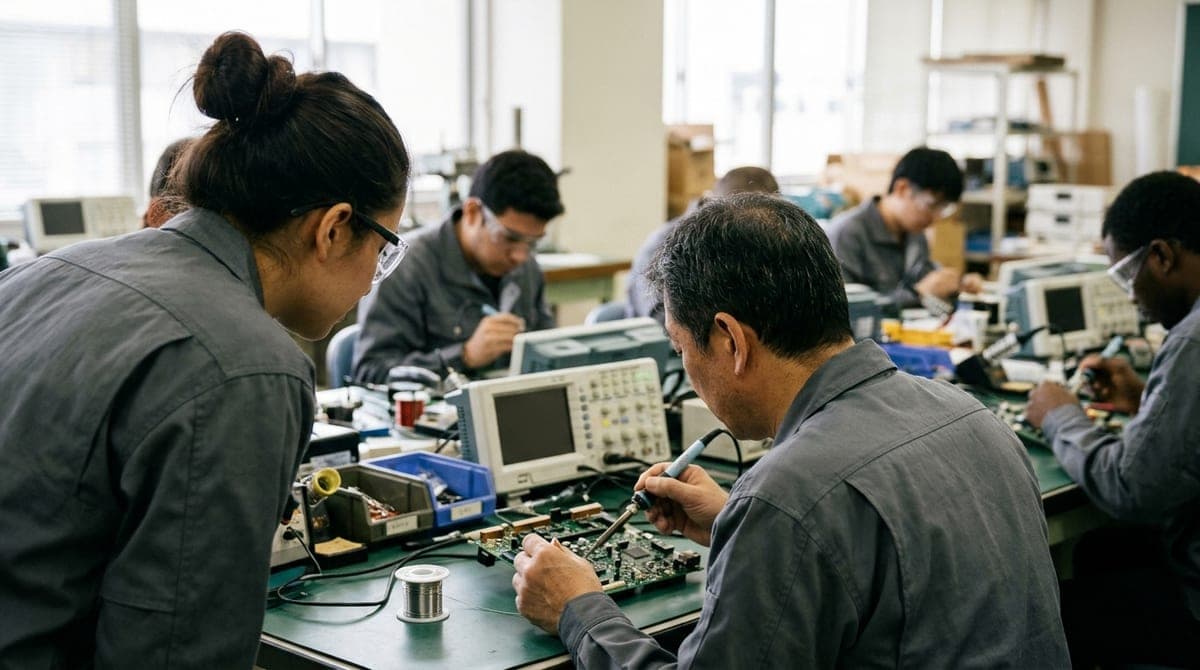
Tokyo Metropolitan Government operates 14 Metropolitan Vocational Skills Development Centres across the prefecture to help job seekers and residents gain practical technical skills. These public institutions provide specialized practical instruction across diverse fields—such as electrical installation, mechanical processing, web design, and hotel services—to help individuals secure employment or advance their careers. Anyone living in Tokyo who possesses the motivation and learning capacity required for their chosen subject can apply through local Hello Work public employment offices or directly at the training facilities.
What are Tokyo's Metropolitan Vocational Skills Development Centres?
The Tokyo Metropolitan Vocational Skills Development Centres are public training institutions organized under the Bureau of Industrial and Labor Affairs. There are 14 center locations spread across major transport hubs in Tokyo, including branches in Chuo-Joto, Jonan, Joto, Tama, Itabashi, Akabane, Edogawa, Hachioji, and Fuchu. Most facilities are located within a 5-to-15-minute walk from nearby train stations or bus stops.
To help prospective students explore options, the prefecture maintains an information hub called the Career Compass Center inside the Shigoto Center branch in Iidabashi, Chiyoda Ward. Individuals interested in vocational instruction can participate in four deep-dive training experiences or eight brief trial activities, attend monthly career guidance seminars, or attend scheduled campus orientation tours held at 2:00 PM on designated dates during application windows.
What fields of study and qualifications are offered?
Training programs are divided into specialized technical departments designed to prepare students for immediate entry into technical trades. Major subject areas include:
- Mechanical and Automotive: Machining, Mechatronics, 3D CAD/CAM, Automotive Maintenance, Automotive Body Engineering, and U-30 Welding.
- Architecture and Construction: Woodworking, Interior Design and Construction, Surveying Design, Building Equipment Construction, and Environmental Air Conditioning Services.
- Electrical and IT: Electrical Work, Smart Factory Engineering, IoT Creator, Network Programming, Web Design, and Security Services.
- Printing and Media: PC Graphics, DTP, Media Promotion, Advertising Art, and Multi-printing.
- Service and Caregiving: Nursing Care Practice, Cooking, Hotel and Restaurant Service, and Life Support.
- Career Exploration: The Job Select course, offered at Joto and Tama centers, allows trainees to experience mechanical, electrical, and architectural tasks to find the industry best suited to their aptitudes.
Graduating from these programs allows trainees to acquire national certifications or exemptions from practical trade exams. For instance, completing regular 2-year courses or qualified 1-year courses awards the Assistant Technician (技能士補) title and waives the written portion of the Level 2 Trade Skill Test. Other programs grant qualifications such as Class 2 Electrician, Gas Welding Training Certificates, or practical exam exemptions for Class 2 Automobile Mechanic licenses.
Who is eligible and what are the admission requirements?
According to the official Vocational Training Q&A, general admission does not require a specific academic degree, provided applicants demonstrate the learning capacity and motivation necessary for the coursework. The primary exception is the Automotive Maintenance course, which requires graduation from a high school under Japan's School Education Law or an equivalent qualification.
Selection is conducted at the specific center offering the course. Candidates are evaluated through two main components:
- Personal Interview: Evaluates employment motivation, enthusiasm for learning, and career plans.
- Academic or Written Exam: Assesses learning capacity. The exam is divided into Gakuryoku Kensa (high school level Japanese and mathematics) or Hikki Shiken (compulsory education level Japanese and mathematics), depending on the course.
Successful applicants receive written notification and enrollment packages by mail after results are published on the respective center's website.
How and where do you submit your application?
Application schedules are published periodically throughout the year. As noted on TOKYO Hataraku Net, recruitment schedules for 2026 include announcements posted on October 5, 2026 for December intakes, and October 19, 2026 for January 2027 intakes. Recommendations for high school graduates entering in April 2027 opened on July 24, 2026.
Applicants submit their completed enrollment form (Nyuko Gansho) and a passport-style photo measuring 3 cm by 2.4 cm to the Hello Work office governing their residential address or directly to the target vocational center. However, individuals in the following categories must consult their local Hello Work prior to submitting an application:
- Employment insurance recipients.
- Individuals holding a disability handbook (physical, mental, or intellectual).
- Single mothers.
- Applicants seeking monthly training allowances under the Job Seeker Support System.
Note that applications for the Job Select course must be submitted directly to the Joto or Tama center.
What is the tuition, schedule, and daily routine?
Classes at metropolitan vocational centers run Monday through Friday, from 9:05 AM to 4:45 PM. Centres are closed on weekends, public holidays, and during standard recess periods (a 2-week summer break, approximately 10 days in winter, and roughly 10 days in spring).
For regular 1-year and 2-year programs, annual tuition is 118,800 yen, payable in two installments (first half and second half). Individuals facing financial hardship can apply for tuition reductions or exemptions. Trainees enrolled in 1-year or 2-year courses are eligible for student commute discount passes (Gakuwari). Those receiving Hello Work training directions may also receive unemployment benefits or training allowances during their study period.
Finding a place to stay
When preparing to move to Tokyo for vocational training, securing a suitable living situation close to your designated center—such as Iidabashi, Akabane, or Tama—is essential before your daily schedule begins. When preparing for training programs, many newcomers stay in a furnished monthly apartment first while completing enrollment paperwork and selection exams. OHAYO Stay offers furnished monthly apartments and rooms in Tokyo; most homes have a minimum stay of 30 nights (shown on each listing). No guarantor, no key money and no agency fee; booking is online with a passport or ID and a credit card.